linktr.ee/jdbuzzard
Here I will post thoughts on the subject of Quality, that can be used for both work and life. I have been posting across social media for three and a half years (below posts from 2023-2025) using over a dozen years as a quality professional and thirty five years working, and will consolidate my thoughts here.
My Linktree can be used to locate where I post on social media. Additionally, my books My Thoughts on Quality, Business & Life & More Thoughts on Quality, Business & Life, can be found on Amazon. These books include the below thoughts.
As I am a human, not AI or a computer. I use my innate ability to come up with topics and write about them. That means there may be spelling/punctuation errors posted here and there, but using critical thinking and not losing our humanity is important to me. While AI & machine learning tools may have their place to help mundane tasks in business, I do not believe they should replace us in the arts, and take over our thinking, accountability, responsibility and relationships.
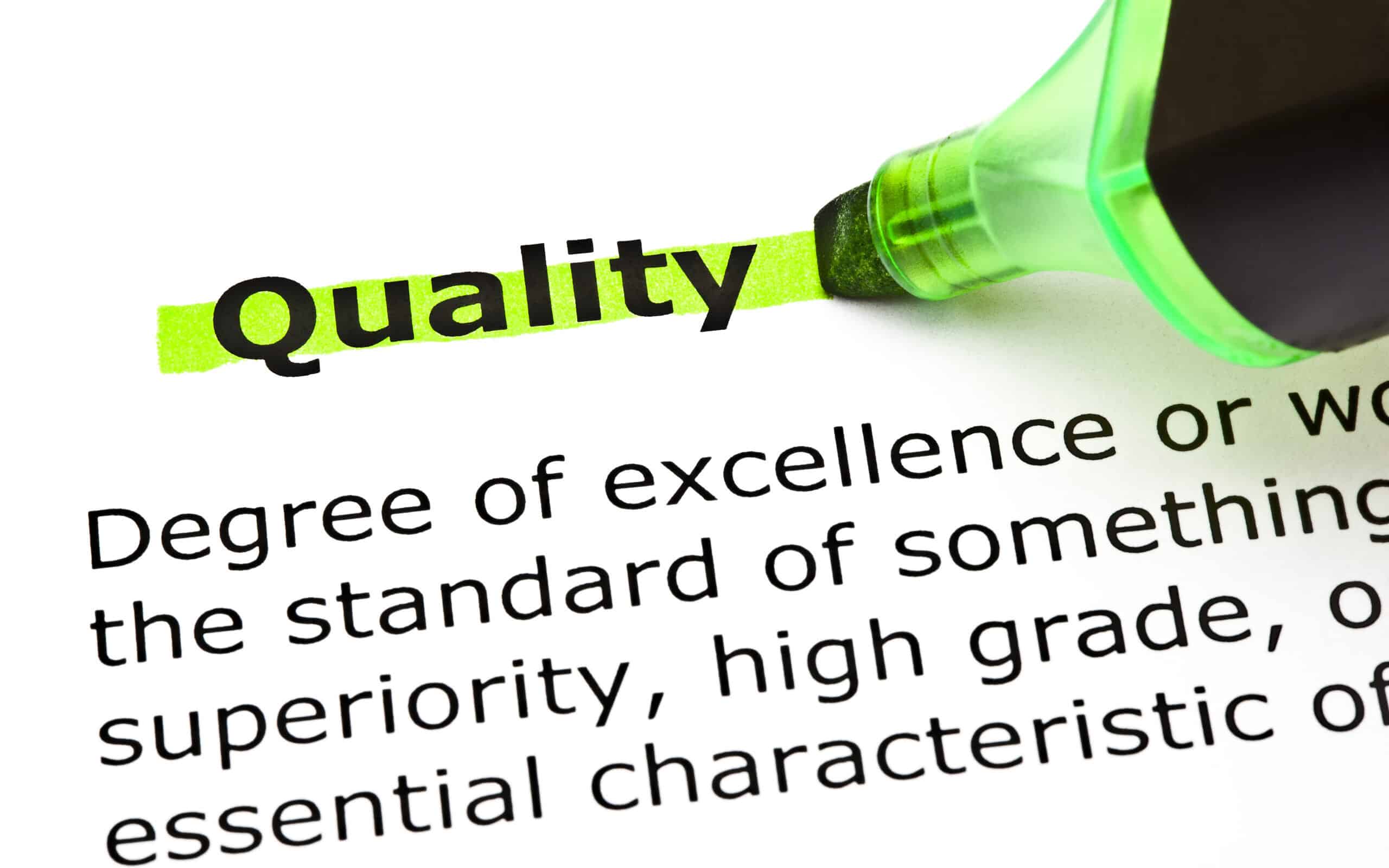
What is Quality?
Why Does it Matter & Why it is Important?
It is important that process owners and leaders take ownership and responsibility for the quality standard in their function. They drive for success, not a quality team if there even is one.
This may be divisive, but from a Quality standpoint it can be a serious concern.
Quality is meant to be independent, when there is an actual Quality team within a business. Many businesses do not have Quality and utilize others in the role as a secondary task. The right people need to be in the right role for anything, to include Quality.
That is not what this topic is about. If there is a Quality team they are meant to be independent from all other functional departments as they are the team who ensures everyone is on point with requirements, plus more.
From an International Organization of Standardization (ISO) standpoint, if a company wishes to be certified or compliant to an ISO standard, Quality answers only to the top.
A concern though is even with that chain of command, if the top leadership is controlling the Quality team to the point where they are hindered or not able to do their job as they feel is needed, they are not truly independent and possibly a puppet or figure head department.
The capability is stunted and the various aspects of Quality within the company may certainly be damaged with the lack of proper oversight.
Something to think about for those interested in a creating a strong Quality Culture where everyone is striving to do their best for the client/customer while continually improving what they do every day.
Top down/bottom up throughout the organization needs to be involved, interested and supportive of the initiative to be better today than you (we) were yesterday and better tomorrow than you (we) are today.
Too often you will hear we have to get this done, and right now.
That is often used to bypass requirements within a process because time is of the essence.
Incorrect.
Any process needs to take account of time, risk, potential issues and as many variables as possible. Doing it correctly, the way intended for the client/customer, is critical.
Don’t get rushed into making errors because it will backfire and there are too many examples of this happening and people dying because of it.
Lessons are meant to be learned, history retained and used to prevent reoccurrence.
You can work smarter and not harder and any process is living and can be improved upon. That is one of the functions of Quality, to work with leaders and process owners to improve it.
Do what is right, even when no one is looking.
Why should Quality be an independent department within a company?
I have seen where this was not the case, that they were ingrained within a department/function and/or answered to a lower lever position in the company.
To be successful a Quality department needs to answer to the highest level in the company.
If a company is interested in ISO certification this is important but besides that, only top management can drive Quality and positive change across the company.
Quality should not be directly involved in the creation of the product or service.
Conflict of interest is the issue. You want Quality to be impartial and objective with what they are looking at.
Now a hot topic that is often an issue within Quality is how deep to go with assistance.
Normally it is not Quality’s position to do something for a given department, just advice through their audit findings and assist with process improvements, customer interaction and nonconformance findings to name a few.
Even the best of leaders cannot write a process. Not everyone has that strength.
Some companies will have Quality assist with the process development to meet the client/customer requirements.
Some will have Quality simply write it.
In the end what is important is that everyone agrees on the final solution/process which is in the best interest of meeting the client/customers’ requirements.
Quality just ensures that the process is implemented and is working once in place.
Teamwork is essential in this, not divisiveness.
I have heard the phrase, Quality is a necessary evil, be invoked by folks on the past.
That mindset is completely wrong and detrimental to a company. It treats Quality as unimportant and something extra not valued.
Quality is generally what the client/customer expects. With that said, if a company doesn’t take Quality seriously and invest in it, they won’t have many clients/customers in the long run.
Quality should not be a pariah at work. They should be allowed to counsel/train/build systems and relationships, utilized to ensure a business is doing what they should be doing, what is right, helping to identify what isn’t right and fixing it with process owners and finding ways to improve the company and its bottom line by making it more efficient.
Use them, don’t shun them.
There are certain things within a Quality Management System that is important and those in leadership need to understand and nurture.
Some below and not in any order:
– Cost of Quality. Yes, factoring in Quality into your costs is important. It does cost some money, but it will cost more if you don’t have Quality at all, and poor Quality will cost you more in the long term even if you don’t realize it at first.
This can also include investing in technology that make the business more efficient. Improvements should be continuous.
– Training of Quality. Quality, like Safety, is everyone’s responsibility. While folks in the operation may not be experts in Quality, they should have some basic ideas about it as they play a part in its success.
– Having Employee Buy In. Leadership needs to be on board first, but they need to ensure all employees understand the system and its intent. Why do they need to care? Why is it important?
– Be Proactive and not Reactive to everything. Stop putting out fires. Prevent them from occurring in the first place.
– Design your processes to what is needed and being done. Don’t make them behind a desk alone. Get everyone involved. Don’t make stuff up. Gear it to your Client/Customer requirements.
– Track what you need in order to be successful. Do you have everything in place to be truly successful? Resources.
– Review what you are doing internally to ensure you are successful for your client/customer. Don’t wait on them to tell you. It could be too late if they bring up something negative that sours the relationship. Don’t wait on Quality don’t identify issues. Raise them to leadership. Fix, don’t hide issues.
– Track change and communicate when change happens. It can affect any number of things in the workplace.
– Communication is essential and must be used efficiently. Get out of silos at work.
– Reduce single point failure opportunities at best as possible.
Take pride in your work.
The goal of Quality, besides meeting or exceeding the client/customer requirements in an efficient and compliant manner, is to assist the operational functions of a business by adding value.
You want to get bang for your buck, so to speak, and Quality can assist in driving towards Operational Excellence.
Utilize Quality when you can to get better at what you do.
A Quality System, regardless of its design and implementation, takes everyone’s involvement in the business to be successful. Without that involvement, along with transparency and accountability, cracks will appear that could lead the business down a path no one should want. Let’s work together to make Quality an important element in our daily lives.
Regardless of the industry, Quality should be treated well as anyone else should.
Treat people how you wish to be treated falls on deaf ears until it affects you. When people are treated well, the business will succeed.
When Quality is found within what everyone does, the business will provide their client/customer what is expected to their requirements and will do it effectively and efficiently.
Each business is structured and run differently.
From a Quality standpoint it is important that Quality, however the department is organized, is autonomous/independent and answers to the top. There needs to be separation to avoid conflict.
Often you will find Quality under Ops, or maybe even Finance, or Legal/Compliance, or maybe other business functions. That is technically a conflict as all those functions should be audited by said Quality department. They are not exempt from the Quality System. If Quality is under these functions there is a stronger chance of manipulation of the Quality team, rendering them less than useful. This raises risks of issues causing the client/customer problems down the line.
Let’s eliminate that risk by removing the barriers for the Quality team.
Third party auditors may also bring this up during certification audits for ISO, especially when they get to the management commitment portion of the review.
Quality, like Safety, are important functions that require autonomy to be successful. Answering to the top also shows the company employees these functions are taken seriously.
It has been almost a decade since the latest version of ISO 9001:2015 came out, and the next version is forthcoming. One of the big changes back then was to look at risk.
Even after a decade this is sometimes missed or just overlooked.
Each company is structured differently, with different functional areas and hierarchies, but the intent is to look at those functions per the risk they pose to the client/customer.
While this could be monthly all the way to annually, dependent on the risk (likelihood & impact), there should also be some flexibility in these reviews. Situations might come up outside of the schedule that needs a quick review as ad-hoc. It is important to document issues, or potential issues, when they arise and not wait for a scheduled audit/review. This also helps with trending and can be reviewed during the scheduled audits/reviews.
Functional leaders and employees can also perform self-inspections/reviews of their areas to build a Quality at the Source culture.
The intent is to monitor actions on a regular basis to ensure whatever the company is doing is meeting their client/customer requirements. Also, between all this, a look at improving the function can be done.
This should not become a pencil whipping event, but something that is useful. Metrics, reports, data, information are all important and needed to ensure everything is copacetic.
It is important to remember that even with the best of intentions, if you don’t follow the requirements, it is wrong.
If you are working against a contract, or to set requirements from a client/customer, and you don’t follow it, it is wrong. Even if you are trying to help them by circumventing the process/requirement, unless you have their permission in advance, it is wrong.
The same goes for laws, regulations and other requirements. Breaking them won’t help the cause.
You could go the route of ask for forgiveness than permission, but is it worth the relationship with the client/customer? Possible financial penalty? Worse?
Helping and going above and beyond can certainly seem nice but not when it is wrong. Those in business should know what is right and wrong. What is contractual or not. What is within requirements or not. What is legal or not. What is safe or not.
Stay compliant.
Risk is there all the time in what we do. You need to plan for it, so it won’t affect you in a negative way.
There are times you need to take a risk to break out of your current situation and reach your potential. Not always easy but sometimes needed. There are always bad risks, but there are also times that a risk can become a positive opportunity. You just need to understand the difference.
Quality folks tend to like reports. Why? Well, generally speaking, it is because it shows the health of Quality in a business.
It is important though to show data in a way that is understood, not too much to overload the senses and focus on the key areas.
That isn’t always easy, but just like documents/processes, reports are living and can be modified at any time.
It is important though not to manipulate the data as that defeats the purpose.
From a Quality standpoint, Safety standpoint, financials, and more, it is important to have transparent, clearly understood information presented to client/customers, external agencies and internally.
If the reports are not used it can be frustrating. Effort goes into creating and maintaining the reports and to not use them can feel like a slap in the face, but also is a missed opportunity to monitor key performance indicators that can make or break a business.
When a company has the ability to automate reports it can save countless hours building them and give employees information at the tip of their fingers. Just a little effort to click through the report is needed.
If created manually, the effort is even more important to respect by using the reports.
Just remember to report on what is key to track, keep it as simple as feasible given the data and requirements to monitor, and use it to improve when needed.
It will be a win win for the company and their client/customers.
Consistency.
It takes consistency to become great at something.
Just like when we get a certification or training on something and do not use it, or at least not very often, the same can happen within a company
For a Quality System and Safety Program, it takes everyone within the business to make it work and turn it into something great for the company and in turn their client/customer.
It takes effort each day and that isn’t always the case. It may be a one-time event, some training here and there, messages sent to all employees sent as a reminder, but none of it sticks because the employees are not engraining it into their daily work.
To build the culture you need to thrive for success, it takes sr. leadership support to drive the importance to all levels of employees. The Quality and/or Safety leader (s) and team cannot be the only ones on a soap box. They will be speaking in an empty room.
It takes everyone.
Reports are only as good as the data. What data is considered important to track? Secondly what kind of report is needed? We still have a lot of old school employees in the workforce who are anti tech. Excel, as an example, has been around for roughly thirty years, so there are many people accustomed to it. Moving to something else, like Power Bi as an example, can be challenging.
Creating a power bi report can be difficult unless you are an IT guru but clicking a few buttons to get what you need should not be too much even for sr. leaders. Saving employees time creating spreadsheets, which can take hours, should be the goal if more automated reports are available.
With AI & Machine learning capabilities out there and becoming better over time, creating reports to capture data will become quicker and easier, as long as it is accurate and what is needed for the business to succeed. Additionally, it will only be useful if embraced.
In Quality, a fundamental aspect of Lean, and continual improvements in general, is waste. Looking for it and removing it to save time and money for a better result for the client/customer needs to be on the radar of leadership.
Operating a specific function within a business without any clear, concrete data to support the initiate will leave you in the dark for outcomes. A client/customer’s opinion alone may not be enough because sometimes they aren’t looking closely themselves.
Quality takes effort to implement and produce for the client/customer. Less effort raises the risk of a poor outcome.
Remember that a business is in place to meet customer needs, and the goal for all employees is to meet those needs through quality of work as well as safely. Safety and Quality go hand in hand in the workplace. Even if not combined into 1 team in a company, they work hand in hand. Quality sets the standard and tone based on client/customer needs, and both are everyone’s responsibility. Be safe.
We should never be too busy to ensure Quality, Safety, Environmental, Security practices and more are in place and followed in our operation.
The client/customer expect us to provide them the services they desire to the requirements they set forth. We should all want to work in a safe, clean, secure environment, and go home safely each day, as does our client/customer.
These aspects should be a part of what we do each day in ensuring and monitoring our workplace for ourselves, our subcontractors when applicable, and the client/customer.
When compliance related fields/jobs are hit with restructuring, downsizing, complete elimination or some other type of turmoil for the sake of saving money or efficiency or maybe even the people in control feel they are not required to achieve the intended results, too often problems will soon after occur without proper oversight.
While the goal is to include quality, safety, security, financial integrity into both leadership and employee alike, this is unfortunately rarely the case in the real world.
It is compounded when the operation is also hit, taking away knowledge and competency which raises the risks even higher.
Some changes may affect those who are new because they may be in a probationary period and some changes may impact long tenured employees because of costs.
New employees can help bring new ideas and new sets of eyes to make an operation better. Long tenured employees help bring stable knowledge of the operation and the client/customer.
Like with everything, both have positives and negatives, but it is important to look at their merits and not make general decisions that are not based on facts.
For those in Quality, professionals tend to play a role behind the scenes monitoring activities and not at the forefront of the business getting their faces seen and voices heard by leadership. This can be difficult because unless there is a problem being worked, Quality is a quiet job with little fanfare and thanks. Many in compliance related positions do so not to expect such glamor and recognition, even though it is welcome and appreciated when given.
A feeling that those around you and in leadership actually does appreciate your effort helps keep you focused.
What should be on everyone’s mindset, not just from a Quality or Safety standpoint, but as a business standpoint, is what can go wrong in an operation.
Having this mindset while performing the tasks needed will keep you alert to potential issues and be proactive.
Running to Quality, Safety or other compliance and support teams, will not help the business, as a reactive approach and constant firefighting will keep the team and organization scrambling instead of doing what their client/customer expects of them.
Understanding what is required, having a documented, proven process for employees to rely on, monitoring outputs as well as risk, will keep the attention on proactivity and not just reacting to when things go south.
Quality at the Source is when employees at all levels embrace this mindset and live quality in their daily tasks. While making a more efficient workplace, it keeps the client/customer satisfied.
Levels of Importance
It is important not to make a mountain out of a molehill when it comes to both work and home life.
There will times where we feel something is a bigger deal than it really is. We either exaggerate the situation or have a view that may not capture the entirety of it or long-term view. Will this be a problem a week, month or year from now?
We shouldn’t allow a perceived problem cloud our eyes from what is really important, which could be those around us.
From a quality standpoint, we review potential nonconformities for levels of severity and impact to the customer, client and business itself.
It is important that we look at them with unbiased eyes and treat them as they really are and not go overboard with efforts.
It is also important to look at the big picture, with time, effort and who will be involved in writing a corrective action report and the tasks needed to correct and prevent long term.
Treat simple issues with simple problems and use resources where and when needed for the big issues that arise, if they do.
Always strive for excellence in what you do, but as we are all humans, there will be times we slip up.
Don’t punish yourself or others with nonconformances. Look at the process first and treat nonconformances as improvement opportunities.
There will be nonconformities due to on purpose, ill-conceived actions, granted. That though should not be the initial assumption prior to a review, because the process can let us down.
Level of Effort.
Will the output equal or better than the input?
Is the effort even needed? If it isn’t required for a client/customer or other requirement, is it value added?
What is the purpose behind the effort? Why is it needed? What all is required to exert? How much time and money will it cost?
It is important to know all this when deciding and planning a project/exercise/task.
You can take this into your personal life as well. It isn’t just relegated to work.
I often hear from Leaders that they don’t understand Quality. Prior to moving to Quality full time many years ago I learned about it and engrained it in my work location.
Quality, like Safety, should be something all leaders as well as all employees understand and ensure is in place.
We all want to go home in one piece and safely, but we should be working to ensure we are meeting our customer/clients requirements, internal requirements and finding ways to improve what we do and how we do it.
Leadership is the driving force behind a Quality and Safety minded workforce.
Encouraging Quality in the workplace will create a system of excellence that will drive future business. Keeping Quality out of decisions will, in the long term, have a negative impact on a business.
Change
Change.
At any stage in our lives, whether work related or personal, it is rarely easy.
Regardless if the change is known, planned for and positive, there may still be apprehension.
I have heard a wide gambit of opinions on change. From “as long as it planned it is good,” to “I hate change” and everything in between.
How each person handles change is different. You cannot expect everyone to feel as you do. And a change for one person may not be treated the same as another.
Promotions can still be difficult, even if positive, because it brings unknowns.
Changes in the workplace with new leadership or changes to work structure/tasks can bring uncertainty and stress.
New and sometimes extra workload may be beneficial to learn from, but will take time to learn, and in the meantime can be stressful.
Changes in relationships through loss or even gains can bring about unknown events and emotions in our lives.
These can be both positive and negative. In any case, change happens all the time in small and big ways and we must do our best to handle them.
We may not always like it, but we can face them in our own way. One answer or method will not fit all.
Building a business system takes effort and there are no quick fixes to implement. While there are plenty of great ideas to use for whatever you want to do, whether for Quality, Safety, Finance, HR, IT, Supply and more within a business, it takes buy in, understanding and time to get going.
Whether hiring a manager/director to implement or a consultant/coach, it comes down to support for the initiative.
Whatever the system, it needs to be designed for the company, easy to manage and easy to understand.
If the employees, let alone leadership, does not get it, it will be a failure.
Clear communication that occurs often with clear guidelines and outcomes for everyone involved is a must.
Change is not easy and muddled processes and actions will certainly not help.
Change may need to be implemented in stages to make transitions easier. Small steps are better than none.
In the world around us, change is usually the only constant.
Many businesses across the world have been through difficult times and their employees are impacted by this.
When a company goes through massive layoffs, the remaining employees are often expected to move on as though nothing happened. That rarely is the case.
While leadership may expect those remaining to be happy they still remain, there will be apprehension and often trust is lost.
If it happens once, it can happen again.
Morale will take a hit, and the companies image could be tarnished.
It is important that leaders lead, have open communication and set realistic expectations for those who remain, while also supporting outgoing employees.
It is rarely an easy time for all involved, at least those with empathy and a heart.
Positive change initiatives at work can make a business stronger, more profitable and even a healthier workplace. But many changes fail due to a number of issues.
– There has to be leadership buy in, in order for it to flow down to all employees.
– Failure to properly plan changes and manage it.
– Failure to communicate change to the workforce.
– Lack of clear requirements and outcomes needed by employees.
– Unorganized and not enough resources to make the change happen.
Don’t set up employees to fail. It hurts the employees, morale, image of leadership and the company. Work to succeed on good change.
Even though we don’t want to believe it, there are people who will never change.
This goes for work and personal life.
We want and hope someone will turn around, change their behavior, but there are some people who will remain in that rut.
At work, no matter how much we want to improve something, change the business and processes for the better, there will be some who will not confirm to the new idea. Doesn’t matter if it is better, they are stuck in their ways and mindset.
There will be those around us as family, friends, neighbors who may have issues you want to address and fix with them. As much as we have good intentions, they may not reciprocate and push us away.
We may want to help and, in our minds, we shouldn’t want to give up, but understand that they may not want help. That can be difficult to grasp and accept.
We should do our best each day to make those around us, to include ourselves, better. We all impact each other and it should be a positive impact.
There is too much negative in the world to want to perpetuate it. It shouldn’t be considered a weakness to want to care.
Fear is a powerful force in our lives that will often hold us back from a change we may very well know will help us. Don’t let fear control your life. It is too short as is to waste it on fear.
Some change is needed, while other change is brought on without our say.
Some change is good, while some is not so good.
Often an obstacle to change is ourselves which is needed to move ourselves forward.
Change isn’t always easy of course, but it is needed from time to time.
You can’t change your life until you change your life.
Seems pretty straight forward, but how easy is it?
There may be things you need to work on and there may be things you want to change that are easier said than done.
You won’t know until you try. Making an effort, a true effort, even small will get you moving in the right direction.
This can apply to a business as well in how it operates for the client/customer requirements.
We all have something we can work on, whether at work or in our personal lives (maybe both), if we are true to ourselves.
Change happens all the time in small to big ways within our lives, whether at work or in our personal lives.
Some is good and should be embraced, while others throw a curve ball and is perceived as negative.
Change for the sake of change is rarely warranted or wanted/needed. On the other side of that coin, positive change, even in small steps, can make a workplace more efficient and into a ‘work smarter and not harder situation’.
Change in the workplace to be successful should be planned and controlled, otherwise there could be chaos which can create a hostile environment. Communication is also a big part to this.
While it is good to be agile with change, that should be the exception and not the standard.
I have seen and continue to see plenty of leaders who don’t like change even when it is good change. They are stuck in the it’s always been done that way mentality.
In recent years a lot of change has leaned towards the negative and not positive. It feels as though we have taken many steps backwards in many cases.
When there is a change at work for a customer or client requirement, there should be a discussion and a process update. Training on the change is then done.
Identified process improvements can bring about positive change.
There should be more positivity in the workplace than negativity.
Change occurs in our work lives and personal lives, but in business it is important to get buy in from leadership and the employees that will be involved.
Change Acceleration Process (CAP) is a method with tools that can help facilitate this change discussion. Created 30+ years ago by General Electric, it is still a relevant way to see change be successful within a business. You can find CAP slides and tools across the web.
It is important to know and understand the change, what it takes to implement and ensure it sticks.
Change happens in our personal lives and at work. At work there should be a controlled method to enact change. Short term, one-time change should be kept at a minimum for the welfare of the employees in the workplace to reduce chaos.
Continual improvement is also looked at which isn’t always easy as people get used to the way things are done and doesn’t feel it can be done better. Believe me it can, even in small ways.
It’s important to be open to change. Not all change is negative or difficult. There is plenty of positive change to be had.
Change happens all the time. Sometimes it is good, not so good, planned or unexpected.
In the business world it is important that change is planned and employees communicated of the change ahead of time.
Regardless if it is from a sr. leader, even a small change could impact the company in a big way.
Changes that require documented processes, systems, guides, training and more to be updated and then possibly communicated on after, takes time and effort. This costs money.
Too often an idea springs up and is jumped on with either no thought or planning to encompass more than the group working the idea. There can be so many others that are affected not in the know and then are surprised when they see or hear of the change. Not usually a good surprise for them either.
Communication continues to be a thorn in the side of many companies and the employees within, whether intentional or not.
A form of change management is vital within a business. Change happens, whether from internal or external sources.
How you handle that change is important.
If you have a change management program in place, it can’t be something that is used only part of the time.
It can’t be used just for convenience some of the time and ignored the rest of the time. It needs to be all inclusive. It needs to be utilized by everyone.
Often, change will bring about improvement opportunities. Use the opportunity to identify and implement improvements and not ignore it.
Document them and give credit to those involved.
Also, it is vital to include those stakeholders involved in the change. Not every change requires everyone’s involvement, but if the change actually impacts a system or function, those involved need to know.
Further communication and training is also needed throughout the lifecycle of the change. Don’t drop the ball and fail employees and in turn the client/customer.
It is important to ensure that change is being monitored and communicated. It is on each Task Order and each department within to monitor these changes.
If the client/customer changes something, by adding, removing, or modifying contractual requirements, it is important to ensure the appropriate process is updated.
If a change from them or internally through a document or process modification affects systems, it is important to keep the software team involved.
Stakeholders involved in the change need to be involved and all those who are affected need to be aware.
Positive change, small or big, takes effort.
It doesn’t miraculously appear.
At work it can take a collective effort. If bottlenecked by one person, that in itself is an improvement to look at.
If positive change and improvements are wanted, they can happen.
Change Management is a crucial process in any business, from the current state to a desired future state.
Communication is essential to keep all stakeholders informed about the reasons for change, the expected outcomes, and their role. Providing training and support for employees is critical.
Like Quality you will get different opinions on change.
I have had differences of opinions with some on change because it was felt that all planned change was good.
What I have seen from experience is that what one person may feel is a good change, another will disagree.
If a company plans a change to the operation and it is decided to let go of people, that planned change isn’t really good for those people let go. Those people can decide to make that change work for them, but in the meantime, they now have to worry about paying the bills and supporting themselves and their family.
I have been writing a small book on change, similar to my Quality at the Source book, and I am planning on a December release. On one of my social media pages last year, I was asked about change, and I decided then I would work on something. While I have a chapter on the topic in both of my current business books on Amazon, it wouldn’t hurt to have a standalone book.
Change is one of the near constants in our lives and there are times we can get lost trying to navigate it. Any help from others with experience to guide us toward the right path on this journey of ours, should be treated as a blessing. I will offer what I can, when I can, and I hope others will also assist me on the journey of change when needed.
Change occurs in life whether we want it to or not. The challenge in business is for leaders to get that change to stick.
It starts with the leader explaining the need for the change. Change for the sake of change is rarely needed or wanted.
There are usually three groups to deal with. There will be ones who are all for it. They can be suck ups, fear for their job or truly support the idea however vague it may be. There will be those in the middle who are of the wait and see mindset. Finally, there will be those who hinder the change.
When you are clear about the change and the need for it, you will be able to get more support for it then just saying that we are doing it this way from now on.
If you are open to ideas from the team and not a my way or the highway leader, you might get some ideas that bolster your change initiative or possible question it.
Questions and concerns from the team shouldn’t be seen as bad because a team should be open to speaking up. A leader or leadership team might have not thought of something or missed something.
I have made this error in the past and learned from it, which is why I always am open to those around me bringing their thoughts to the table. That is also why I explain the reason for the change, which should be geared toward positive improvement.
Processes
Processes.
Some love them, some hate them.
Almost thirty years ago when I started in Food Service & Retail, there were no processes. It was on the job training and maybe some safety videos. When I became the trainer, I trained from experience.
When I moved into Postal twenty years ago, again there were no processes. I watched some safety videos and went to work.
Over the years, especially as customers/clients continually expect certain things a certain way in a Quality manner, processes have become important in some fields and businesses to ensure employees have a standard way to do things.
Over the last 15+ years I have written dozens upon dozens of processes, mainly as work instructions, manuals, Standard Operating Procedures (SOPs), Plans, etc., which also was used to build training slides. It has always been easier to have something to rely on and utilize for the workforce as many companies are in a dynamic workspace with many moving parts.
This is important is a business wants to be ISO certified. Documentation is the main piece ISO certifiers/registrars look for.
Experience and knowledge still matter, but I have heard many times from many leaders in companies that they don’t require processes because they have experienced professionals. That is great, but people are fallible, and we are all not perfect and many companies and sectors in the workforce have strict criteria to follow.
Whether you have been in your profession for decades or not, it is important to have a process of some type to fall back on. Each company will do things a bit differently to get to their customer/clients out goal.
Even if you have a doctorate, having a process to read up on or to grab if you forgot something, is important.
Documentation is a key aspect to any Quality & Business system. If it isn’t documented, it didn’t happen. How will employees complete that documentation?
Processes don’t have to be complicated, but they do need to get the employee in the right direction.
I am sure your customer/client will appreciate the effort to get them what they want, when they want it, the way they want it.
Keep it simple, but stay compliant to and within the contract, agreement or whatever you work from for your business.
Processes.
I see across social media sites discussions on processes.
Some are joking about the subject and some are not. Often, they are talking extremes.
Some want none. Some want too many.
How about meeting in the middle?
In many industries and companies, some processes are needed. If interested in ISO certification, among others, documentation is important.
I know I wouldn’t want to work in a place with no processes. No matter your experience, each company does what they do differently. Word of mouth training is not usually efficient as each person will teach differently and dependent on requirements, may not always achieve repeatable success.
Having too many processes, steps and approvals will bog down work and create a negative environment.
Also having processes in place that employees do not quite follow because there are better ways to do it, creates potential issues.
Making a process behind the desk without input from those working it is not efficient or effective.
Take a sensible approach to what is needed to meet whatever requirements you have without going crazy. Work as a team on them to get a real process not a made-up piece of paper that is fantasy.
Keep it simple when possible.
A system of any kind in a business is only as good as the people who make it work.
Whether for Quality, Safety, Finance or anything a company needs to be successful, if the entire team is not actively using making it work, it will never be successful.
I have seen plenty of companies who use a third party to create their Quality and Safety systems. That is because the company didn’t have someone within to write them. How do you think the implementation went?
Having a system on paper is of no value if it is not understood, used and correctly overseen to ensure its success.
Each company is different with different goals and employees, but it is the team who will succeed or fail for their client/customer. Success starts within.
Succeed.
Processes, Documents, why do we need them at work? Why does it matter?
Often folks do not want them because they will be held to them. They see them as a hinderance, an obstacle.
That is most certainly not the intent or point of them.
If it isn’t documented, it didn’t happen. In many companies and fields, work needs to be documented for the client/customer as a record the work was done. It is often how you get paid.
Regardless of the experience the employees may have, to be successful consistently, there needs to be process in place to follow. It’s there to rely on when you need it and can save time by following it.
Each company is different on how work is handled, even in the same field. Relying on word of mouth training alone will not guarantee success. Build a system that allows employees to be set up for success, not in the dark winging it.
Processes don’t have to be overly complicated but there needs to be something in place to work from.
This is even more important in highly regulated & technical sectors, like in Manufacturing, Software/App Development, when contracts are involved with a list of specific requirements to meet & more.
Use processes and documents to your favor. Don’t treat it as just another ‘necessary evil’.
Many companies have a Quality System to ensure they have in place what they need for their client/customer.
Depending on the size, scope and requirements, will determine the complexity of the system.
It should be designed to meet requirements and not become overburdened.
Have you ever heard something like this before: “I do not want a complicated system. I don’t need someone who sits in a room and knows nothing about my work telling me how to run it. I was successful before ISO and I will be successful after it.”
There is to be a purpose behind setting up a system that will work for you, not against you, and meet the requirements you must follow.
The operational system to meet those requirements are designed by those in charge and need it, the process owners and Sr. Leaders.
Any Quality System is generally designed by a Quality Leader and Team, although often companies don’t have that in place and it fall on whoever the Sr. Leadership deems. A Quality System is meant to ensure the business is successful, beginning to end of what they do. It is a business tool.
Use S.M.A.R.T. goals to meet your objectives and get your data, document what you need to be successful for your requirements & keep it as simple as feasible.
It is a living system, and improvements can be made at any time.
There are moments, especially in a time crunch, that having an imperfect process in place is better than none at all.
While the Process Owner should strive to ensure the written process precludes errors, deviations and other issues in the first round to prevent rework, there may be times where those issues can get worked in the second round review later.
Documents are living and can be modified at any time to get to where you need to be for the client/customer.
It is important that there is something for employees to work from, even for what may be considered simple processes.
No Quality System is perfect. If a company has a third-party audit for certification, there is usually even a minor issue found if a proper review is done. None of us are perfect, but what is important is that we try and learn from issues found.
No matter how long we have been in a job or business, it is important is to continue to learn. I certainly don’t know everything and am always refreshing my knowledge and learning something new.
It is important whether it is a Quality system, Safety system, etc., that Leadership learns about it and understands it in order for it to be properly implemented by all employees in the business. Lean on others and learn from each other. Often ego prevents us from doing that.
I have seen many companies who do not have Quality within their business and although they skate by for a while, it catches up to them. Often the focus is on safety and simply getting the job done.
Quality Management when done right ensures efficient processes are in place to reduce errors, time, risk and more in order to meet the client/customers’ requirements.
It is important that processes are written for employees to be successful for what their customer/client needs.
Over processing is simply a waste. Think Lean when you create a documented process. Does it make sense? Is it needed? Will it make work more cumbersome? Will the requirement be met keeping it as simple as possible?
A process is needed but don’t tie employees’ hands with it.
Processes are to be created by the subject matter experts and communicated to those who need to use it.
Often times training is not effective, and it is important to ensure that regardless of the position that questions are asked, and effectiveness is monitored.
Leaders especially should not pass the buck, so to speak, in regard to their processes if there is an issue. Accountability is important and issues should be owned and worked through to correct and prevent.
If there is a misunderstanding then it needs to be worked through and fingers not pointed. There are always improvements that can be made in what we do every day, even if small.
Working together and following processes as written or making needed improvements to existing processes will make a stronger organization which will flow down to the customer.
Also, often less can be more for processes, and not over complicated. You may not need a zillion documents to record what you do for your customer/client.
It is important that a business has in place a process for its employees to be successful. Surprisingly this is not the case in many companies.
Often experience is relied on, or word of mouth, hands on training, etc., but that does not ensure a standard that meets the customer/client requirements.
Even when a process is written, if it is not clear and/or the right people are involved, know and understand it, then it doesn’t matter.
Transparency, clarity, involvement, oversight and communication are all vital elements to ensure a process works.
It is important for a business to look at integration of documents and/or systems. You may have 2 documents or systems when 1 may work. That is Lean in the workplace. Be efficient as a business. Get out of those silos. Communicate and the business will be stronger
As I have worked with hundreds of companies on Quality systems, what I find for most is that there are no processes and controlled forms in place. Getting further into the 21st century this continues to be a surprise, especially with the demands that many companies must ensure compliance for their customer/clients’ requirements. Talking improvements, this may be the first one a company needs to have in order to be successful for their customer/client as well themselves.
Documentation is important for any system a business has. If there is no documentation, there is nothing to show you met requirements or provided a service to your Customer/Client.
Those involved in the creation of processes need to get everyone in the process involved. I have seen far too often where the sr. leader creates the process and forms behind a desk and when it is implemented, those actually doing the work finds it either useless or inadequate. They start work arounds and eventually problems occur that impact the quality of the product or service.
It is key for those involved in writing a process to walk the operation, see what is needed, talk to their people and make something that is useful to the employee and meets the client/customer’s needs.
This happens more often than you may think. You can walk into many companies, especially the larger ones and ask employees, up to maybe even the managers, and ask them their thoughts. You’d be surprised by the results.
I have seen it through my own experience and the ultimate goal isn’t to create another piece of paper but something functional with a little give, but that meets the intent to what the client/customer needs. You should also not corner yourself into an action or step that isn’t needed. As an example, use this blue pen and not a black or red pen, unless there is some specific requirement for it which there could be in some fields/sectors.
Have a lean mindset when developing processes. Keep it simple and to the point while meeting the requirements. Also, processes are living documents, meaning they can be modified at any time. Streamlined, added to, whatever it may be, you don’t publish and then forget it.
Documentation is important and will eventually become a Record you did something for your client/customer.
It is important that whatever documents you have are controlled and managed for your company. A Process will often need a controlled document of some kind. Without it, there is no record of transaction & nothing for employees to follow to know what is right.
Standard Work/Leadership Standard Work- Both require knowing what is happening in the workplace, monitoring numbers and actions, having processes and systems in place, improving people through training, and becoming more efficient through improvements.
Even today the understanding of documentation eludes some.
Early in my work life documentation wasn’t a thing, but each field, industry, business handles it differently. It has also come a long way in the last 30 odd years.
Generally speaking, if it is not documented it didn’t happen.
How do you show a client/customer that you achieved success for them? Sometimes it may be a physical object that is seen, but even then there may be underlining requirements to meet that require documentation.
Do it right and document your service, product creation, or whatever system you may be working for the lifecycle of that work.
There will then be fewer questions from clients/customers, regulatory agencies and others.
It is important to remember that while having business processes and systems in place is key for meeting various requirements, it is also important to not overburden employees with them.
Any business should ensure what is needed by the client/customer or other outside agency is met while keeping everything as simple and streamlined as possible.
Self-imposing a complicated set of processes and systems does not help anyone. It opens the business to potential errors and noncompliance by having too much in place to properly manage.
Think Poke Yoke when possible.
Keep it simple, eliminate too many layers in the bureaucracy, and lower chances of bottlenecks and single point failures.
Documents, like training, are only useful when they are utilized. Same goes for their parent process.
Understanding where the documents are, and how they are to be used is key. Training on these documents is also important, and it needs to be verified to be effective, otherwise the use of the documents may result in something not quite wanted.
Training is twofold. The trainer needs to convey the requirements in a simple, clear manner, and the trainee needs to absorb it and implement it.
Words alone are often not enough, and questions can be important because nodding the head, or something similar, does not guarantee a positive training session was conducted.
Remember to verify through effectiveness sampling that the training worked, and ask questions if you are still not certain of the task handed you. Those in charge should, if they are meant for the role, understand that it can take more than once to get it.
Documentation to show a service was done is quite important. How do we know a requirement was met? How does out client/customer?
Whether it is from us directly or through a subcontractor, there must be documentation to show we completed x, y or z.
These records are documented information for services provided to show during audits, or when they are submitted to the USG at the end of the contract. It shows that we achieved their requirements on this program.
Without it, we have nothing, and there is a chance the client could question the validity of our service provided.
It is better to not have those questions and do it right the first time.
Documentation can be a pain, am I right? Having to remember to do x, y and z all the time?
Quality then comes by and slaps your hand for not doing x, y or z.
The administrative side can be what gets most companies and functions. The work being done for the client/customer may be great, but if the t isn’t crossed or the i dotted, there could be a nonconformant situation.
What is also why samples are important as a small mistake may be just a follow up.
While it may be a pain, documentation shows that x, y and z was done as a record of the service provided. It is important, just like providing the service itself.
It is important that when there are processes in place meant to ensure requirements from the client/customer or regulatory, that they are not circumvented by leadership. In doing that there is a chance that, in addition to the process not being followed (noncompliant), that the outcome will harm the company. Intentional or not, the end result may be disastrous.
That also goes for when there are no processes and anyone and everyone is permitted to do as they wish. While it may be working for the moment, one wrong turn and the whole operation could collapse.
It is important to have documentation in place for employees to work from because without a standard to meet requirements, the outcome will vary and could very well be wrong.
You can often hear the word process thrown around a lot at work. Those in quality especially love the word. I do as well. On the flip side you will have employees who hate or despise the word. They want to do the work the way they want to, period. I understand that, especially for those who have been in their field a long time.
The problem is that many companies have strict criteria, requirements, regulations and rules to follow from their client/customer and government entities. A process will keep the employees, and company in line with them. When the word process is used without something to back it up, it is just a word. People forget a conversation, email or message sent about something. They may even forget about a documented process, but words that are unofficial will fade from our mind in time. You want something to be followed, document it officially.
What is important is that it should be against a requirement or need, and not just some random thought a leader has. Your quality system does not need to be inundated with frivolous documents that do not help the organization, function and team toward the goal of meeting the client/customer’s needs.
Always look at keeping things simple, less burden on the team, but have what is needed for success. Although employees may not like a process and will grumble and sometimes even sidestep, a documented process is critical to most companies for successful outcomes and continued business.
Documents in a business are living and need to be updated as changes occur or if more efficient methods are found.
Remember that if it is not documented, it didn’t happen.
It is important to ensure there is documentation in place (record) to show that the service and/or requirement has been completed.
It is equally important that any document used to show services are met is controlled. This ensures a standard is set for all employees to use and variances are eliminated when possible.
It doesn’t matter if it is a compliance function (Quality, Safety, etc.), other support function (HR, Contracts, Supply, Property, etc.), or an operational function providing direct services, systems, or products to the client/customer, what the employees do should not be complicated.
Having too many steps or actions to take just means something will be forgotten and missed.
There are plenty of sectors with a massive amount of regulations and requirements, but we should never compound them by adding unnecessary internal constraints.
Keeping it simple, as much as possible, is the preferred method to stay compliant to our client/customer requirements as well as any regulatory requirements that govern the operation. That goes for corrective action plan actions as well. Find the root cause and implement a plan that doesn’t get too crazy with the fix.
Any audit, inspection, surveillance or review should be considered a chance to dig into what you do and ensure not just compliance to client/customer and internal requirements, but opportunities to improve upon what you are doing.
They don’t need to be big. Small improvements (kaizen) are still a step in the right direction. Treat the experience as a positive and that will be the outcome.
Separate from recommendations, if an actual nonconformance is discovered/identified, it is also an opportunity to improve and ensure the client/customer is not affected by it. It also should be considered a positive situation because the client/customer didn’t discover it after the fact.
It is important that as a business, you have a documentation system in place for employees as well as for the client/customer. This will provide consistency in results.
It is important that whatever the documents and processes a business has in place to meet their requirement, that the employees know they exist, read them, understand them and implement them. You’d be surprised how often employees are in the dark.
Having a document is useless if not used. This is even more important for security and safety related processes, especially if it impacts the client/customer.
Documents should also be developed with those who will be using it, or at the very least leadership needs to walk the floor and process to view if it aligns with is actually occurring.
A process and document guiding employees and possibly impacting the client/customer can be one step away from a life-or-death situation.
Documents are for employees to use and should be useful to them. They should have a hand in ensuring they meet the need on the floor and not someone behind a desk.
It is important for those responsible for processes, to ensure that if they need to update it, that they do not remove a form or system, or whatever it may be, before replacing it with the update.
When this happens, there is a gap. That gap with either nothing in place to use, or something uncontrolled, is technically a noncompliant situation. There may be a reason or good intent behind the decision, but it raises the risk of nonconformance and missing something that can impact the client/customer.
Changes to an existing process need to be smooth and quick, if possible, which will lower the risk. This can be as simple as modifying or changing a document, making a system update, or adding/removing a step/action.
Secondly, but just as important, the process is still auditable during this change. What is still in place within a Quality Management System is still auditable. You can note the change being drafted/worked on a document, or piece of a process, but you don’t just blow off the audit or review of the process because a process is being revised.
What are the employees doing? What are they documenting? How are they doing what they are doing for the client/customer? The client/customer requirements don’t stop while a process is being either created or modified. This is also why it is important to perform a Gemba Walk of the operation, not just by leadership, but Quality.
It is important that once you have a documented process in place that you don’t forget about it. It should be more than a piece of paper. Creating something for the sake of it, to cover a requirement, to make quality or an external auditor, or even the client/customer happy will not make for a successful process.
If leadership doesn’t write it, not only with the client/customer and requirements in mind, but also for the employees, it will fail as a process. Without everyone’s buy in, the output will not meet requirements the vast majority of the time. Is anyone checking the results? What are the results? Are the right documents being used and correctly. Are the instructions easy enough to understand and follow? Is it current? Can it be leaned?
It is important for any type of operation that requires some form of documentation to remain compliant for a litany of reasons, to walk through it on a regular basis. This in charge of operations should also be performing some type of quality control check or review to ensure those requirements and the processes are still working and relevant.
Never leave this to a quality only function, because regardless of if it internal or external quality assurance, once an issue or gap is found by them, it can be too late. Issues and gaps missed should never get to where it affects the client/customer, which is why quality control within the operation is vital and when they work in tandem, the business will be successful.
Creating a process for what you do for a last-minute audit (external or internal), or other last-minute need, will do little to improve anything for the operation. A process is meant to be created for employees to use as simplest as possible to meet requirements, worked between leadership and the employees who do the task. Improvements can happen at any time and can come from employees or leadership through Gemba Walks or just working the operation.
Fixing things just for an auditor during or before an audit, shows a reactive situation and not a proactive environment. The operation should be looking at their processes on a regular basis to see if there are gaps, issues, improvement opportunities, errors, etc. This is why Quality at the Source is important to build into the culture.
Problems
I see on a near daily basis a lack of taking issues seriously.
From a Quality standpoint, it is about ensuring requirements are being met, but more importantly to ensure the issue does not cause a problem again in the future.
That takes effort and time to review the issue, and get into the root cause analysis the way it should be done.
I see a clear lack of attention needed and time taken to ensure that the true root cause is found, let alone corrective and preventative actions taken.
Preventative actions is meant to put into place controls or eliminate the issue completely, but often times a Band-Aid is used. More often than not, training is the action taken.
How often have you forgotten something? How often have you been trained on something at work for a workplace requirement and get busy and forgot, or glossed over it? So, how will training prevent a problem from reoccurring?
Often, effort does not want to be used to put in place a good control or elimination. No time, or desire, or no money to fix a long term problem, when there really is if wanted.
This all takes leadership, both the functional area that is handing the problem, and Sr. Leadership to support with resources, time and action.
Action is really all that matters as words have no meaning without action to support it.
If a business is truly there for its client/customers and has a mission first mindset, effort and time will be used to ensure Quality of service is implemented in its entirety. Quality should never be a buzzword.
Without it, there will always be repeat issues, as well as issues period. It will impact the business, employees and client/customers long term.
There have been so many recent debacles in the world that affected many people, shows a continuing need and importance for Quality checks in the workplace.
Whether it is aviation & IT as the hot button issues lately or manufacturing & services of any kind, ensuring what we are doing is correct to our client/customer requirements is vital.
As evident in the most recent situation in the news, one very small error can impact millions. Our actions in life, even if we don’t quite think so, can have a profound effect on others.
We should do our best to make our impact positive.
There will be mistakes made along the way, but in business we should do our best to limit errors through automation or processes of some kind.
Quality is a vital aspect that is often overlooked or discounted.
Let us as a collective whole remove that from our mindsets.
Corrective and preventive actions need to ensure the problem doesn’t rear its ugly head again, but also the actions need to remain in place long term and not forgotten.
Would you rather be proactive or reactive?
I would imagine most would say proactive, but events often in life unroll in a reactive manner.
Scrambling to do something, get something, fix something, instead of planning and ensuring what you need, or need to do, or get is scheduled or done.
It raises stress levels and causes panic.
Whether in business or home, proactivity should be the plan and goal.
You should always do what is right, what is needed, be mindful of your surroundings, your needs and requirements and stick with it.
Scrambling about in chaos is never a good situation to be in. Some may enjoy chaos, but most do not.
It’s important to be Proactive and not just Reactive when it comes to Problem Solving. Remember Cost of Quality.
Don’t “Fix” or “Improve” a problem and cause more trouble/problems. Think.
It is important as an auditee, if there are any lingering questions remaining at the end of the audit, surveillance, inspection or review, that they be ironed out before the out brief or at a minimum during it. It will save everyone time afterward if there is the perceived potential of a nonconformant situation not addressed that requires documenting after the out brief.
8D Problem Solving is another method you can use as a team to work out issues.
The 8 steps are the following: D0 (Plan), D1 (Form a Team to Review Issue), D2 (Describe the Problem), D3 (Implement Interim Containment Actions), D4 (Identify the True Root Cause), D5 (Develop Permanent/Long Term Corrective Actions), D6 (Implement and Validate the Solution (Effective?)), D7 (Prevent Recurrence), and D8 (Recognize the Team).
This is just one method a team can use to solve a complicated/complex problem.
A Quality Circle is a tool to help with problem solving and innovation in the workplace, if used correctly.
Zero Defects in a Quality Management System – Is it possible? Yes. Is it difficult? Yes. Should it be a goal? Yes.
It is important to action any nonconformance identified in a timely manner. While the goal is to get them completed sooner rather than later, it is also important to do it right.
Some actions may take longer than others and should be understandable. The timetable though should be reasonable.
When there is a goal to close out a Corrective Action Plan and the actions have not been completed, there needs to be justification for an extension. That extension request needs to happen before it is overdue.
It is also important to not kick the can down the road continuously as that shows no effort to be compliant to requirements or action the fixes designed in the corrective action plan.
Closing a CAP because it is aging just to open it up again is just a way to meet the system/process with the closure goal and doesn’t fix anything. That needs to be avoided, and leadership needs to do their part to complete the actions in the CAP and close it properly.
Long term actions are important and not just throwing a bandage on the problem.
We cannot forget lessons learned. Just because time has passed, or there may be a new contract being worked or there may be new employees in the operation, lessons learned are meant to ensure you take what worked and what didn’t and incorporate it into the business structure for a better outcome.
Too often people forget and repeat past mistakes. It is also important to remember what worked in the past may not work in the future. It doesn’t hurt, when needed, to ask the client/customer if a different approach can be taken. They may not care, or they may, and you need to continue with what has been in place.
You won’t know unless you ask. You also won’t remember lessons learned if you don’t document it in some manner.
Too many terrible situations have occurred because the past was forgotten and the present and future paid the price.
When nonconformances are found, usually by an outside source, there is a sense of dread and sometimes anger. This is why it is important to drive a culture toward Quality at the Source to get personnel looking at their area continually against requirements. Most nonconformances shouldn’t be a surprise and there will always be odd ball issues that come up from time to time.
Fixing a problem doesn’t mean the nonconformance went away, so asking for it to be rescinded should not be requested. The issue is there and was there for a period of time. Can’t go back and fix it in the past. Document the fix and move on.
Documentation allows for trending to ensure fixes were permanent and not just a bandage and is also a record. Remember that if it isn’t documented, it didn’t happen.
There are different ways to communicate. Different styles work for different people. How you communicate can matter depending on the audience. When the audience is diverse, there are even more challenges.
Normally you should communicate in a way that a person or audience can understand. Talking over their ability to comprehend won’t help. That can be easy to do for those who are knowledgeable and hard to juggle.
Having spoken to C suite level employees to sr. directors and managers down to the employees directly leading and running the operations, I have found that nearly all of them prefer easy, to the point explanations and breakdowns of the situation. It can be from slide shows to training. Keeping it simple is preferable.
For those in quality, especially those who have taken lean or six sigma training and completed associated projects, it is easy to throw out a bunch of charts, diagrams, analysis, numbers, jargon that no one outside of them really understands or cares about.
I tend to mix it up. Most of what I write about for quality, business and life is kept as simplistic as possible so anyone can understand, regardless of their station in life. My children books focus on important topics that children can use as they grow and my goal for my business books is to pass along knowledge in a manner that anyone can get and use.
I do not believe you need a degree or some type of piece of paper to pass along experience and knowledge to others in any form. With everything, you must choose who you take advice and opinions from.
No matter how good you are at communicating, it must be received on the other end. Verbal, written, body language, doesn’t matter.
If we impact one person positively in our life, we have made a difference. How many lives can we positively impact throughout our lives?
Quality Assurance & Quality Control
Often a Quality Audit is considered an intrusion, but it is not.
Ensuring as a business that you are meeting the requirements designed to be successful for your customer/client, an audit is simply a way to monitor that system.
In an ideal world, a business wouldn’t need a quality team or even a safety team as the employees and leadership would engrain both in their daily tasks.
Monitoring compliance, identifying issues, correcting and preventing them through detailed root cause analysis and risk identification/reviews and finding ways to improve are some of what all employees can do.
We all play a part in the success of the business we are in as long as we remain a positive force for compliance and improvement.
Is Quality Control/Inspections a waste. Technically yes.
While there is no clear cut consensus as to what is all value added and non-value added wastes in Lean, value is what the client/customer will pay for.
Extra steps, extra work that is not truly needed to meet your client/customer requirements is technically non value added activities.
To remove Quality Control inspections, the process needs to be refined to remove any potential deviations. Will that happen 100% of the time? Probably not. There still needs to be a way to watch to ensure your product or service is to your client/customers’ requirements. That is why the process needs to include a review of some sort and Quality in general needs to be monitored through the lifecycle by the function’s leadership and employees. It isn’t extra and needs to be part of daily tasks.
Mission first should never be a reason to let service/product quality slide and deteriorate. Your client/customers certainty won’t appreciate it and could cost your business which will affect finances and jobs.
While Quality Assurance and Quality Control are different and distinct functions, they complement each other and work best with each other. There should not be a vs involved as there should not be a choice between one over another.
Using vs to show the difference may work for communication and understanding, but people also need to understand that while QA sets up the system, and QC acts on it, both are collaborative.
Using both in a collaborative effort gives the company employing them a more well-rounded quality system as both are crucial to achieving top level products and services.
Quality Assurance focuses on prevention through process improvement and Quality Control focuses on discovering issues through monitoring, testing and inspection before it gets to the client/customer.
Improvements are continual and for an effective quality management system, employees need to always be looking at how they can further improve what they do to meet the client/customer requirements.
Quality will often get a bad rap for being the “police” who go around looking for problems. That may be the case sometimes but should not be the intent.
If done properly, Quality is infused within an operation. A dedicated Quality Team may not be needed if all employees employ it within their operation from beginning till end.
I know I did when I worked in the operation side of the house, before moving to Quality full time. I assessed myself and the workplace daily against requirements. I incorporated continual improvements in the operation. I updated processes when needed to catch something new, no longer needed or just lean it.
When Quality finds something not quite right in the operation and reports it, and it is captured within a non-compliant report and issuance of a corrective action to the function, they are treated with distain or at least indifference. A pariah even.
It is on the function, all employees, to include leadership, to identify issues in their area and work to contain, correct and prevent reoccurrence. This means not fixing without documenting a root cause and subsequent actions and especially sweeping under the rug, hiding/ignoring it which is the worst.
You should never wait for it to become a real problem that will affect the client/customer. You should never wait for Quality to find it. Implement Quality at the Source.
Know (everyone) your operation, understand it, monitor it and report on it.
Having worked with hundreds of companies from many countries on building their Quality Systems, I have seen a wide variety of people, their style, leadership support, and willingness to be a partner in the endeavor.
Some companies are suited to act as a subcontractor, supporting a larger mission, while others prefer staying the big dog, so to speak. Some mix and match as needed.
If a company decides to become a subcontractor, they can either work toward supporting the prime contractor in their success or derail them and set a reputation of being difficult.
Whatever the nomenclature used, the two are partners, working toward the success of the client/customer’s needs/requirements. Both have to be serious in their efforts and outputs if they both want to be successful.
Subcontractors, whether they acquiesce to the demands of the prime based on the contract or not, either party being difficult will rarely have a positive outcome.
Some partnerships do not work, as time and efforts begin and show. Not all companies and their various personalities will fit together. It is important to understand that, to see it, and to acknowledge it, so both parties can move on for the betterment of themselves and their client/customers.
There are plenty of opportunities out there for everyone.
Auditing has been around for thousands of years.
The word itself is derived from Latin, Audirr, which means to hear/listen.
In ancient times auditors listened to the oral reports from officials to owners or those having authority, and confirmed the accuracy of the reports.
The task of auditing in some manner goes back as far as the Persian and Egyptian empires in ancient times.
Modern auditing began almost 200 years ago. Now it is focused on what is written.
With that said, I still prefer to listen and also learn when I audit.
While an auditee can talk their way around things, try to divert you, and maybe talk their way out of situations, you can learn a lot from them during interactions.
They can also learn from the auditor. It can be a mutually beneficial relationship.
While it is still important to review documentation, don’t forget to listen and also look around.
Don’t talk over them or simply talk incessantly. Don’t be a simple checklist auditor. If you see something amiss while in the area, jot it down and discuss the observation.
Each company will handle this differently, but there are usually a couple of thoughts on this subject that people have.
For audits, whether they are from Quality, Safety, Finance, Compliance, etc., they can be scheduled in advance, or with no advance warning.
Usual etiquette is advanced warning as folks get busy. It can be scheduled into the auditee’s calendar. This though can cause a potential issue.
When auditees are prepared for an audit in advance, they will often have everything laid out for the auditor and will show their best and hide their worst. An auditor needs to get past that to see, through a sample set, the true output needed to review. For an auditee, there should never be hiding involved as within a company it should be one team, one fight to ensure compliance to your client/customer requirements. Extra eyes never hurt in this.
A no notice audit allows the opportunity to see things how they really are. Some companies have requirements from their client/customers to be audit ready at all times. This infers a no notice audit will be utilized.
It is important and should be the case that workplaces are up to speed at all times and ready for anyone to walk in. In reality with many moving parts, that isn’t always the case. Even with a no notice audit, if the auditee is busy with the mission, there needs to be some flexibility.
It won’t be the end of the world to come back a little later.
Both the auditor and auditee need to have some understanding with each other in these cases.
Without QA & QC, a company will pay more long term, and not in a good way.
Quality Assurance & Control work together in Manufacturing, Services and Software to be successful. Not 1 or the other.
Quality Assurance and Quality Control work together for a great system at work. They are both important elements to a Quality System.
Quality Control will be built unique to each business, but it is only 1 aspect of Quality to use to be successful.
Quality Professionals, both Control and Assurance, often require a bit of magic to do what they do with little to go on.
If you have a list of requirements for an operation that you are auditing, you will review them, correct?
Now say there is a nonconformance for that operation. Do you bypass the operation because of that or do you still review the requirements, especially if the NC doesn’t directly pertain to all the requirements?
An example from a safety standpoint is that you previously identified an exit light burned out, or some other issue that is on the CAPA, you still inspect the facility, correct? There are other things to look at. You don’t just bypass the facility and all the requirements to ensure are being met because of a CAPA in place, right?
For Quality, if a function doesn’t have documented processes in place as required or something else that is documented in a nonconformance along with a CAPA, you still may have parent requirements to ensure are being met, right?
There are many fields out there with various requirements from the government, regulatory, contractual, or internal, and each will be different in how it is audited. Each company may audit differently as well, but requirements are requirements to review for compliance regardless, correct?
So from my standpoint even if there are non-conformances open within a given area, the work is still being done every day and should be monitored at least for other requirements not tied to the NC or from a process review standpoint to ensure the client/customer is getting what they expect when they expect it.
There are times CAPAs can take months to correct, but in the meantime the work continues.
While training in the operation is important to ensure everyone knows their requirement, process, and the compliant outcome for the client/customer, what about the support side?
Let’s pick on Quality.
Does Quality know what they are doing? Are they trained? Do they understand Quality, whether it is for ISO, regulatory requirements, company requirements or other aspects needed?
Does Quality Leadership mentor their team to ensure they are built for success? Do they leave them to find their own way? Is the blind leading the blind?
If training is available, it is only good if it is used. Training can come in many forms but taking what is available and using it is the first step.
Those in leadership then need to ensure it works. Those who take the training may have suggestions to better the training as there are always opportunities to improve.
Remember from a compliance standpoint, Quality cannot hold others to something they themselves do not do. It is hypocritical and insincere. It does not help foster the right environment and culture.
Those in glass houses…
For an audit, whether internal or external, my experience has shown that preparation is the biggest time consumer. It is important to thoroughly review the operation and the processes they use, it’s history concerning past audits and nonconformances.
Conducting an audit can be a breeze compared to writing up the checklist, if the auditee is also prepared.
Auditees should also be prepared to present how they conduct their operation and meet the client/customer requirements, to include any regulatory requirements.
When both sides are ready, it is an easy event and not burdensome like some might think.
It is an opportunity to learn from one another and gives an open for improvements. Improvements are often considered change, so even a good improvement might not be taken under advisement.
All Quality can do is look, ask, document and advise.
When working as a team, Quality and the operation can make a more efficient workplace, and build quality into the operation.
Audits and reviews of processes are meant to challenge the workforce and get them to think. When this is done and the workforce understands they are part of ensuring quality of work is theirs to control, Quality at the Source will become the standard.
The outcome may be a mix of opportunities to improve and nonconformances, but in the end it is meant for the operation to start taking control of Quality. Just like Safety, Quality is also an element that needs to be owned by the operation in order to be successful for the client/customer.
It is important to remember as an auditor and an auditee that a checklist is not something set in stone.
Something may be seen and asked about that wasn’t in the original scope. That isn’t a bad thing. Areas may get checked with a different checklist each time because a small chunk is being looked at each time.
What is important is that everything is good, and any potential issue is addressed.
Sometimes we need to think outside the box and not be a checklist auditor. It can also be a learning experience for the auditee and a chance for them to look at their area differently.
For an audit, preparation is key, and the outcome should be meaningful and useful/beneficial to the auditee and company.
It is important to understand the difference between Quality Assurance and Quality Control.
In order to build a culture of Quality at the Source, Quality needs to be a part of the operation’s process. That will be Quality Control throughout the operation’s process to verify requirements are being met through the lifecycle of the process. When an issue is found, it is then raised as a self-identified nonconformance. A proper root cause analysis is conducted through a walk of the process and then corrective and preventative actions are put into place to fix and prevent a recurrence in the future.
Preventative actions generally mean something in place as a control or elimination of the cause and not just refresher training.
Quality Assurance will take a snapshot in time when conducting a review, audit or surveillance on the system, process or product.
Proper Quality Assurance will look at the process holistically with a goal to close any gaps and ensure that the possibility of non-conformances Quality Control finds are lowered as much as feasible within the process. Unless automated, documentation will always be an element that can cause issues as they need to be completed and can get missed or used incorrectly.
Keeping an operation’s processes as simple as possible and still meet requirements is the best way to go.
Another element of Quality Assurance, which can also be tied to Quality Control, is to look for improvements. Looking to lean, clean, organize a workplace, eliminate waste and lower and eliminate variances are some elements to look for when improving. Not all improvements need to be big. Small Kaizen or 5/6S projects can make a big impact.
When a corrective action is put together to correct/prevent a problem, including a quality review within, it needs to be handled delicately as the Quality Team (or possibly just one person) should not be used as a crutch. It is the operation’s responsibility to maintain the CA/PA actions.
Quality (team or 1 person) can and should include any of those actions as part of their Quality Assurance reviews of the function for a period of time. Any recent nonconformance needs to be a part of those audit/surveillances to follow up to ensure the actions are still in place and followed.
That also ties to the operation’s processes, that should be looked at and updated for each nonconformance to ensure risk is reviewed and actions are incorporated for long term success.
While Quality itself needs to be ingrained into the operation and its processes and mindset, abusing (as in forcing them to be included into the operations fix) a quality team will not help.
Quality, like Safety, is everyone’s responsibility and any operation needs to take responsibility for the quality of their work meeting the client/customer’s requirements.
Collaboration.
It is important to use one’s knowledge to help others in the same field, and even outside it.
In large companies you will possibly have functions working in multiple countries. It is important to ensure those subject matter experts are helping each other succeed for the company.
In this day in age where we are all connected through the internet and technology, we should not be working in silos and holed up in a cubicle or dark room.
We should be using each other’s knowledge and experience to better what we do, cross collaborating within departments, companies, sectors and industries to achieve that.
There will be times that there will be people who hold on to information and knowledge as that is felt to be their power and job security, but long term it harms more than helps.
Knowledge and ability should, whenever possible, not be held solely by one person. Single point failures are often a nonconformance waiting to happen, and it raises risks.
Let’s be more open and understanding with each other in order to be more successful. Success can be for everyone and not a cherished few. Don’t let jealousy or ego block success for all.
It is important for Quality, and other compliance related functions to look at risks when developing their schedule of audits/inspections/reviews.
A risk-based calendar should be the way to go, especially if you are certified or modeled around ISO principles.
In this, risk needs to be reviewed regularly as situations may change on ground with personnel, requirements may change, or a myriad of other possibilities may raise or lower the potential risk of the operation.
The relationship between the auditor and auditee is critical for having a successful outcome of the audit or review.
A successful audit or review isn’t an interrogation; it’s a partnership aimed at strengthening the system. The relationship between the auditor and auditee is critical. Here’s a simple guide for Do’s and Don’ts for Auditors and Auditees to ensure a productive, professional experience.
For the Auditor.
Do’s.
Prepare Thoroughly.
Review relevant procedures and past audit reports beforehand. This shows respect for the auditee’s time.
Explain Your Process.
Start with an opening meeting to explain the scope, objectives, and how the audit will be conducted. Transparency reduces anxiety.
Ask Open-Ended Questions.
Use how, what, and tell me about questions to encourage discussion, not just yes/no questions.
Listen Actively.
Pay attention to the answers. Follow up on clues. The best findings often come from listening more than talking.
Focus on the Process, Not the Person.
Phrase findings as, The process requires X, but the record shows Y, not You didn’t do X.
Maintain Professional Skepticism.
Verify information objectively. Trust, but validate with evidence.
Provide Clear, Constructive Feedback.
During the closing meeting, present findings factually and discuss potential improvements.
Don’t.
Surprise the Auditee.
Stick to the agreed-upon scope unless a significant risk requires a deviation (which you should then communicate).
Act as the Quality Police.
Your role is to assess conformity and facilitate improvement, not to punish or belittle.
Interrupt or Talk Over the Auditee.
Allow them to complete their thoughts and explanations.
Speculate or Offer Off-the-Cuff Opinions.
Base all conclusions on objective evidence gathered during the audit.
Leave the Auditee in the Dark.
Discuss observations as you go to ensure there are no surprises at the closing meeting.
For the Auditee.
Do’s.
Be Prepared.
Have relevant records and information readily accessible. Ensure key personnel are available.
Designate a Guide.
Assign one primary point of contact to facilitate the auditor’s requests. This streamlines the process.
Answer Questions Honestly and Concisely.
If you don’t know the answer, it’s okay to say, I don’t know, but I will find out for you. Do not guess.
Provide Evidence Readily.
Show the auditor what you do. Demonstrate the process in action if possible.
Ask for Clarification.
If an auditor’s question is unclear, ask them to rephrase it. Understanding the intent behind the question is key.
View the Auditor as a Resource.
They have a unique perspective. Use the audit as an opportunity to get feedback and identify improvement ideas.
Don’t.
Hide Information or Obstruct the Audit.
This undermines trust and suggests you have something to hide. Transparency is crucial.
Argue or Become Defensive.
If a nonconformity is found, see it as a chance to improve, not a personal attack. Ask for the evidence and understand the requirement.
Volunteer Extra Information Unprompted.
Answer the question asked clearly, then stop. Oversharing can lead the audit down unnecessary paths.
Blame Other People or Departments.
Focus on the process and the facts related to the area being audited.
Follow the Auditor Around in a Large Group.
This can be intimidating. The designated guide is usually sufficient.
The Goal for Both Sides.
A successful audit or review leaves the auditee with clear findings and valuable insights, and the auditor with a thorough understanding of the process.
When both parties follow these guidelines, the audit becomes a tool for growth, not a source of friction.
A lesson learned from the past, is that auditees need to look at their own processes on a regular basis. Performing a Gemba Walk, reviewing the work, double checking the documentation and ensure everything is working or not. Everything can be improved upon.
Having an audit plan is important for both you as the auditor and the auditee so they understand what is being reviewed and the audit is transparent.
Audit checklists will come in all varieties with format, but generally you are looking for requirements, the question & answer, along with any recommendations & findings.
An audit out brief is a meeting held at the end of an audit/review where the findings and recommendations are provided to the auditee and discussed. It provides an opportunity for the auditee to discuss the results, provide clarity and feedback before the final audit report is issued.
Each company and sector may look at requirements in a slightly different manner or method.
I annotate the requirements checked, and the past 18 years has been in a heavily regulated/requirement filled sector. Then next is the question, followed by the answer to the question.
There is usually a summary of findings and recommendations/improvement opportunities.
I have always written it for the layman. Anyone should be able to read an audit and understand what was asked and reviewed with the outcome.
Also, for auditing or reviewing others, there is a scope, and such involved as part of the audit plan.
The summary is usually what is discussed in an out brief based on the outcome of the question/answers from the body of the checklist. I have, depending on the amount looked at and possible multiple functions reviewed, put it on a power point to present.
Some companies will have a system to generate checklists and others will be manual. Some may have checklists pre-populated while for others the auditors have to create their own.
So, what do you do and how do you format and present the audit plan and checklist for in brief and out briefs?
An audit is a snapshot in time based on what the auditor viewed, was presented and documented within the report. It is not continuous, similar to some quality control activities that may be embedded within the operation.
It is important to remember that what was reviewed is from that time or the past. What happens after and in between audits is irrelevant where the auditor is concerned.
Additionally, dependent on the sample size, the auditor may not uncover everything. There should be not blame put on an auditor if every little issue is not identified. The owner of the operation needs to ensure that employees incorporate quality into their work and spot issues when they occur, and preferably before, in a proactive manner.
Ideally quality would not be required if the operation ran like this as issues would be identified, corrected and prevented… and even better, the operation would be planned out in advance to eliminate or reduce any potential risk of nonconformity.
Blame should not be thrown around, but a team effort to stay on course for the client/customer.
Trust but verify.
It is important in Quality, or any related position, to ensure requirements are being followed. Taking one’s word from an auditee will not ensure requirements are being met.
While trusting your colleagues and those you are auditing is important, it is also important to ensure you see and verify through documented information, that they are doing x, y & z.
This is a part of being a responsible auditor, but it is also important to ensure proper records keeping as there are many sectors that have stringent requirements to follow, and it is vital to have in place for success of the company.
It is important that auditees understand when they are asked for information it is simply to validate and not offend. Requesting information via documentation is standard practice and has been for millennia when it was on papyrus and clay/stone. It establishes credibility of the reporting and documentation involved in the operation.
Professional skepticism is a critical mindset for auditors.
Sampling is a technique auditors use during their audits to review a certain amount, as dependent on the situation, a 100% review may be time consuming, challenging, costly and simply impractical. Selecting a representative sample, auditors can gain reasonable assurance of the accuracy and reliability of whatever they may be reviewing.
Statistical sampling uses math to select and evaluate the sample.
Whereas non-statistical sampling relies on auditor judgment and experience to select the sample and evaluate the results.
AQL (Acceptance Quality Limit) is a widely used sampling method an auditor can use to determine the acceptable level of sampling needed. It can also guide an auditor deciding whether to accept or reject the sample based on the number of issues found. It could be a follow up or it could be a nonconformance and could mean pulling a batch of widgets or other material/equipment.
So how do you use AQL sampling in a Process Audit/Review?
AQL (Acceptable Quality Limit) is often used in manufacturing for product inspection, but the concept can be applied to anything in reality, especially when auditing a process with a large number of records. It gives you a statistically valid way to decide how many items to check.
Let’s look at an example.
Say you need to audit a month’s worth of invoicing. Let’s say 500 invoices were processed. You can’t check all 500, but you need confidence that the process is working. An AQL table helps you decide the sample size and what number of errors would cause you to question the entire batch.
Here are some simple steps.
1. Define Your Defect
First, what is a major error that would be unacceptable to a client? For an invoice, a critical defect might be an incorrect dollar total. A major defect might be a missing client PO number.
2. Choose Your AQL Level
This is the worst level of quality you are willing to accept and still consider the batch acceptable.
For a critical defect (like a wrong total), you’d set a very strict AQL, like 0.1% (almost zero tolerance).
For a major defect (like a missing PO), you might set a tighter AQL, like 1.0%.
3. Use a Sampling Table
Based on your batch size (500 invoices) and your chosen AQL, a standard AQL table (like ANSI/ASQ Z1.4) gives you the plan. For a batch of 500, the sample size might be 50 invoices.
At an AQL of 1.0%, the acceptance number is 1. The rejection number is 2.
What Does It Mean in Practice?
You randomly select 50 invoices from the 500.
If you find 0 or 1 defect, such as one invoice with a missing PO number, you conclude the invoicing process for the month is acceptable.
If you find 2 or more defects, the sample fails. This tells you the error rate in the entire batch is likely higher than your 1% tolerance. You must now conduct a 100% inspection of the remaining invoices or launch a significant corrective action to fix the root cause in the process.
AQL sampling turns a guess into a data-driven decision. It saves you time by auditing a smart sample size, but it also protects you from missing a widespread problem. It answers the question of how many is enough to check to be confident?
What is considered an observation found during an audit?
It tends to be considered a documented note that highlights a potential area of concern, deviation from established processes, or an issue in internal controls discovered during the audit, review or inspection. It is something that may require attention or improvement in the function.
These observations tend to be different from findings, in that they may not always be a clear nonconformance of a specific requirement but rather point to a potential risk or area for improvement. It is closer to a recommendation but may or may not always need to be followed up on.
It should be something useful/helpful to the auditee to guide them in understanding it and improving the observation.
A layered process audit (LPA) is when an organization uses different levels to conduct regular, focused audits to verify that processes are being followed as intended, especially for anything critical. Instead of inspecting final products or services, these LPA’s review and verify the processes that are documented to meet the requirements for the product or service. This helps prevent process drift, identify gaps, catch issues early, reinforce the written processes, and instill a culture of continuous improvement when improvements are identified to make the products/service better. There are plenty of wastes to identify and correct… you’d be surprised
Each level may use different checklists because different elements may be reviewed.
Frequencies of audits/reviews may be different for each level.
It is important that leadership is involved and responsive to these, to include any employees involved in the operation.
Key benefits, when implemented correctly, include enhancing safety and quality, drive accountability, and creating a company-wide commitment to excellence.
While Quality at the Source should be a goal for functions within a business, owning quality in their area, it also cannot be abused.
Historically, from experience, leadership here and there does not like issues reported as they feel that hurts their image. Issues are hidden and not actioned, swept under the rug, so to speak, and the problem festers. If it gets out, it can impact the client/customer.
When issues are found, documented and then corrective/preventative actions are not put in place, let alone containment actions, ignoring this simply shows a lack of importance by leadership for quality. It shows a lack of quality culture, importance of establishing quality and then maintaining what is needed to meet the client/customer requirements.
You will find, far too often, that both employees and leadership in any given function just do what they do in the name of the client/customer. They provide the service or product. This quality stuff is often secondary or deemed not important to the mission. Completing that form, or having a written procedure for guidance, or checking that block is just ancillary to the real task of the job.
It is vital sr. leadership takes action and secures accountability, holding their leadership and employees to a quality standard, that will bring pride to the workforce and bring future business through quality work provided.
Quality shouldn’t be extra work, no different than safety. It needs to be built into everything we do and think.
Management reviews, whether you add the word quality or safety in front of it, exist to be more than a checkmark for compliance.
They are meant to provide regular reviews of the system for leadership to evaluate the overall effectiveness. If it doesn’t show you that, or if leadership doesn’t either take it seriously or action issues identified, it is simply a waste of everyone’s time.
Not having any at all will leave everyone involved blind.
They allow management and leaders at all levels to assess past performance, identify areas for improvement, ensure goals are being met, and make informed, logical and goal driven decisions for continuous improvement and align operations with the business objectives, which should be in line with client/customer needs.
Don’t make it a paper drill, wasting time collecting information and sitting in a room if it won’t be properly implemented.
Requirements
For a business to be successful, planning is a big part of it. Know what you need, your client/customer requirements, and get the right people in place to make what you put in place work and maintain it through checks and balances.
Communication is another important element to be successful and often times underutilized.
Lastly, never forget about looking for improvements. Often, we get used to the way things are when we should see it as they could be.
Ensuring Governance is in place is important to the success of any business, especially the larger companies. Without it in place you are at risk and compliance could be a problem that could cause issues with customers/clients.
Something that creeps up in our daily lives dependent on our jobs and industries is all about mission first. In that we forget about Quality and Safety. Both need to be engrained in what we do every day as we all want to be safe and go home in one piece as well as do what is required for our Customer/Client. It takes a strong Company Culture for both to succeed.
Let’s talk Quality and Compliance. It is important that whatever requirements are in place to follow, if changes are needed, that they be communicated the right folks. If a Customer/Client needs thing changed it may need to go through a business Contracts department. Change can often lead to extra costs. Remember to communicate with the right people and get it documented.
A Total Quality Management System needs scheduled periodic reviews by leadership to ensure what was designed is working. This requires constant monitoring by Leadership in between Management Reviews to ensure all elements are met and all employees need to be engaged and understand they play a part. Quality is everyone’s responsibility.
Many companies have subcontractors for labor, materials and equipment and it’s important that this is a partnership.
It can happen where the subcontractor may at some point, for some reason, decide to do what they want their own way. Who is the prime? Who is responsible in the end and who pays whom?
This is often an important aspect of a business and can be a serious potential nonconformance if not handled properly.
An important part of a business that is not looked over in many cases are the suppliers of equipment, materials and labor. These third-party entities are responsible for so much that is not on leaderships minds. If a company does not ensure oversight is in place for these important suppliers, what they may end up getting may certainly not be what they wanted or expected.
It is important that any business who does have suppliers of some kind, double check where their equipment, supplies and labor come from to ensure it truly meets requirements.
Be audit ready at all times.
Do you want to be remembered by your client/customer for the good work you did for them, or the poor services/products you gave them?
Your decision. Your action to take.
Within a business, employee focus is on the particular job and workplace.
For medium to larger companies there is often a set of governance documents that can be overlooked.
They could be from Quality, Safety, HR, Property, Finance, Security, Supply Chain and more.
These governance documents/processes and possibly systems within these departments govern the entire business.
Employees may not interact or use these governance processes/systems often, but they need to be aware of them.
It is easy to get stuck in a silo at work. To be successful for the client/customer and stay compliant to possibly an endless list of rules and regulations, it is important for all employees to be aware of more than just their sole function.
This is why Awareness is something reviewed for a number of ISO standards. Plus, it is just good business.
Knowledge is power. Understanding is divine.
It is important to understand requirements. What requirements externally is there to follow and incorporate into your process?
Are employees trained on these requirements? Do they understand them? Are they using them in their daily work? What are the outcomes from your function? Is it meeting client/customer satisfaction?
We often think we are meeting their requirements because they aren’t looking too deep or close at the service or product being provided. That is why it is important that we are.
If you find a problem and identify it through self ID nonconformance as companies should have ways for people to be a part of the Quality System. That may only be the first step. You may also need to inform the client/customer dependent on the situation. That needs to be part of the corrective action plan. Identifying internally may not be enough. Transparency with them keeps doors open.
Quality, Safety, Security and really anyone in a compliance related field that monitors functions to ensure a variety of requirements are met, have a challenge in doing that without alienating those working in the function/operation.
Even if they say they don’t mind, it is rare that when someone stops by your area to look around, that it is really welcome. I kept a very close eye on my operation before moving to quality and still had easily an audit or review a week from someone external, if not more. A lot of eyes, visits and time away from the operation.
It is important to build relationships between those in compliance related jobs and the operation, but it is also important that those in the operation keep an eye on their area.
When this happens it makes it easier on everyone and in the end the client/customer will be happy.
It is important that the compliance related individual, whatever they are looking at, ensures they also pass on their knowledge to the operation. Without that knowledge the operation may very well not know what to even look for.
What does right look like? Sometimes you need to get nitpicky to tie all the loose ends up and sometimes you need to hit the big important parts first.
What one looks at another might not. Over time though with different eyes looking at different things, the operation should have no gaps, issues, discrepancies, deviations. etc. and the operation will run not only smooth but efficiently.
Small improvements here and there can make a big different over time.
You may find gaps during internal audits that may require training or a relook at processes. It is important to identify and correct these before any external audit, or even internal. Improvements are continual.
It is important to remember that during these times of mass layoffs and restructuring by companies, many that have billion dollar revenues, that with the loss of people we don’t lose continuity and historical knowledge.
Risk is raised when people leave and there may not be someone with the same skill set, knowledge, expertise or appointed to cover a certain requirement for the client/customer.
The long term risk is losing said client/customer when certain elements they want aren’t getting done.
While companies are in business to make money, they are also in business for the client/customer who the employees help.
Greed should not impact the client/customer, nor the employees.
An out brief from an audit, surveillance or review, which ever it may be called, is a chance to discuss the recommendations, findings and overall result.
You may get most of the information needed for it prior to the out brief, but even with multiple attempts and reaching out, there may be little things here and there that are still needed for clarity.
An out brief allows this opportunity for both sides to finalize the review. An audit, surveillance or review isn’t done until it’s done.
Sometimes you need the out brief to tie those loose ends or to get a captivate audience to finalize the results with concurrence and possible additions needed for the report.
It is a good thing to discuss and achieve positive results, so take an out brief as an opportunity.
You may hear about suitability and effectiveness in the audit world, especially those involved in maintaining against an ISO standard.
Suitable audit criteria in ISO auditing, specifically under 19011, are considered being clear, understandable, relevant, reliable, neutral, and complete. These serve as the benchmark against which conformity to requirements is determined, which is vital when determining compliance or lack of prior to final out brief and closure of audit or review.
Let’s look into each a little closer.
Relevance: The criteria being audited must pertain to the subject matter and contribute to conclusions for useful decision-making.
Completeness: All required factors necessary for the audit’s positive outcome must be included in the criteria, especially anything important or vital.
Reliability: The criteria need to allow for consistent and repeatable evaluations and/or measurements of the subject matter over time and under similar circumstances.
Neutrality: There must be no bias that contributes to conclusions as they must be objective and free from the influence from the auditor’s personal preferences or the auditee’s agenda.
Understandability: The criteria need to be clear, comprehensive, and in a way that reduces the possibility of different interpretations by different people.
Objectivity: Factual information is critical and free from subjective opinions.
Comparability: The ability to compare the results from different audits using the same criteria is important, especially to assess progress in addressing previous recommendations. Trending can be an important tool.
What are some examples of this? Well, a company should certainly some type of policies, procedures and processes established. What are the process objectives/goals? What metrics are tracked?
What statutory, regulatory and other third-party requirements are there to follow from local, state, national, international parties, plus ISO, client/customers and other stakeholders?
Effectiveness will be determined against these policies, procedures and processes, metrics, requirements form all parties. Has the expected outcome been met?
Have risks and opportunities been addressed and are monitored?
Are nonconformances being initiated and tracked through to completed timely?
Is continuous improvement in place, which can be identified through risk assessments, nonconformance corrective action plans or general improvement opportunities brought by employees or found through Gemba Walks by leadership?
It is important for an auditor, and even process owners, to go beyond a checkbox when reviewing requirements and processes. Be thorough. Don’t assume. Don’t be superficial. Question the narrative and assumptions.
Take the opportunity to fix gaps, issues and further improve what you do and ultimately ensure compliance is being met.
Fixing a problem found, whether by someone external, an internal auditor or by the function, is important.
And yet you will find little effort when compiling a corrective action report. Lackluster root cause, repeat why’s when using the 5 Why method, 1 or 2 why’s, missed corrective and/or preventative actions, training as the only actions taken, no time frames the actions will be taken, not following through with the action, not even responding to the nonconformance to begin with, are all elements you will find.
It is frustrating for those in quality, as well as safety and other compliance related fields. The lack of effort is difficult to handle. You can communicate and train process owners, guide them with notes, write it for them, but in the end the results are theirs.
Sr. leaders need to understand that and not put the onus on the compliance function, as generally speaking, there is no power and authority they can use to force the issue. That takes sr. leadership. It takes them to hold the function accountable and build the culture.
It is vital for any company with client/customer requirements to follow, as well as other regulatory requirements, to instill the importance of identifying issues, correcting them properly and timely and having effective preventative actions that will eliminate reoccurrence.
The current client/customer will appreciate it, and future client/customers will want your business because you are transparent, proactive, compliant and successful.
Be that type of company, and not one who hides problems, shuts down innovation, puts employees in a box with no support and thinks short term.
While short-term thinking and planning can have its place, long-term thinking and planning is what will keep you in your client/customer’s thoughts through stable, effective and efficient outputs that make them want your products and services for years to come.
The customer journey, depending on the company and task, could be mapped out.
Mapping out a complete path and set of experiences someone has with the company’s product, or service, from initial awareness and research through to purchase and post-purchase loyalty, can help in understanding customer needs and behaviors.
Businesses that do this, use it to optimize the customer experience, improve customer satisfaction, and build long-term relationships instead of being passive.
Watermelon metrics are metrics/data that look great on the outside (green), but further digging will find issues (red).
So, using the watermelon method, green numbers are good, but the negative indicators are red, show the real story. Data can be skewed by unscrupulous people and can be dangerous.
Nonconformity
Quality Escape.
Those words together are not generally a good thing.
When a product or service is released that contains a deviation/defect, whether caught before it reached the end external customer or not, it is a quality escape. This has been in the news lately and can give a business a bad reputation and lost customers.
It is important that requirements/specifications are met before leaving the assembly line or point of origin. Quality reviews throughout the process by either inspectors or Subject Matter Experts (SME) of the operation will keep an eye and minimize escapes to hopefully zero.
Quality Assurance activities meanwhile ensures the process is in place and working while looking for potential improvements.
As a team, the business will be successful for their client/customer when working together with the common goal of quality.
It is often easy to criticize others for various reasons, but it is important to look inward first. Being critical of others when you may be just as guilty doesn’t help anyone.
This is important in the Quality and Safety world where compliance is checked and measured. Is Quality and Safety, for example, compliant to requirements as well.
It is important to have everything in order yourself before going out and expecting others to be.
Escalation.
There are times where a situation cannot be handled and you have to elevate it to the next authority.
Whether it is in a customer service job or in Quality/Safety and issues are found, if the issue cannot be resolved through a variety of reasons then it must be passed on for resolution.
For Quality and even Safety, often when a nonconformant situation is discovered and submitted to the functional area leadership, they may either not have the ability to handle it or no interest. In this case there may be no choice but to pass it up the chain to the next authority.
If the Quality or Safety culture is strong within a company, especially starting with the Sr. Leadership, then it will be handled properly.
If not, well, the company will be at risk until the situation is resolved.
Usually better to have a lower risk level in business.
While Quality is not the police, they do tend to put on the investigator cap when needed to root out issues to prevent reoccurrence or bigger issues from occurring.
Regardless of the industry, this is an important part of a good Quality system, and an important trait needed in a Quality Professional.
While not a goal of an audit or review (certainly shouldn’t be), there will be times when a nonconformance is found that will be documented. This can be touchy as it can be seen or treated as a stigma, a stain on the operation or leadership.
It should be taken as an opportunity to improve the operation, ensuring that work is correct, and the client/customer is going to get what they need in the end.
Whether it is documented or not, the work will go into fixing it regardless, if taken seriously, so the extra step of completing a corrective action plan is just jotting down the fix.
Remember that when issues are found internally, they are not found by the client/customer, which is a good thing.
Nonconformances within a business, especially the larger the company, need to be documented when found.
Sweeping it under the rug will rarely help as the root cause was not reviewed and proper steps taken to prevent reoccurrence.
Documenting also helps track trends to ensure bigger issues are not at work.
Often leadership doesn’t want to spend the time reviewing the situation, workplace and process, putting together a plan, and ensuring preventative actions are in place to thoroughly prevent a reoccurrence. Often short cuts are taken, if at all, and the minimum actions are put in place that are either a band aid or short term solution.
That is not beneficial for the company or their client/customer, and will simply cause further problems down the line.
It is better to be in a proactive stance than reactive, because otherwise you will always be putting out fires.
Work toward a culture interested in identifying the issues, properly correcting them and staying compliant while looking for ways to improve each day.
Raising nonconformances, even internally by the department/function, for the sake of participating in the Quality Program is only useful if it is done right.
If a true root cause is not done correctly, any corrective and preventive actions are moot.
If root cause analysis does not go in order and jumps around, you will not find the true root cause.
If you have actions in place that are difficult or impossible to document, they are poor actions. Also, making the process more complicated is not generally a way to go.
If you are continually putting down training as a preventative action, you have bigger problems at hand. Some time and effort are needed for the CAPA. Otherwise, you will be reworking the issue when it reoccurs.
People don’t like doing extra work and often a CAPA, even when internally identified, is extra work. Time away from the mission at hand is needed and not enjoyed.
To ensure you are providing your service or product your client/customer wants, that effort is needed.
Identifying is just the first step, and it is an important one. It should be celebrated when done and not vilified.
Quality is everyone’s responsibility, not just the Quality team, if a company is fortunate to have one.
Containing the issue, correcting and most certainly preventing through documented actions after a real root cause is identified is very important and crucial.
This needs to happen in order for any Quality System to truly be successful.
When an issue is found and a nonconformance is written, stick with the actual issue for the written report sent out. The corrective action report should not have, as part of the nonconformance, the root cause. Quality may feel or have an idea of what the issue is, and even if the process owner self-identified the issue and gave a story for the nonconformity, keep it short, simple and to the specific requirement. When the root cause is actually analyzed and corrective and preventive actions put into place, then the story can get written… truncated of course.
I have seen too many corrective action plans where quality already surmised what the root cause is when they write the nonconformity portion of the report they send to the process owner. Stay away from that till later.
It is important when putting together a corrective action plan that all milestone actions are tied to an actual, real root cause established through a thorough review (Gemba) of the situation.
Milestone actions need to have completion dates as they will be verified by Quality for effectiveness. This is most critical for USG nonconformances.
Milestones action dates need to be feasible. While the goal is to get it completed as soon as possible, that is not always feasible. It can take time to get staffing, materials, get systems/processes in place, find a subcontractor to do something, but with that said, there have been many cases where actions took 6+ months to complete. In some of these extension requests were requested. Some put that length of time into the CAP from the start, which raises questions from the client/customer.
Dependent on the situation, that in itself can show a deficiency if it takes that long to achieve a goal. The client/customer expects you to take immediate action to contain and correct a deficiency and to prevent it from reoccurrence in a timely manner.
Prevention is the key. The action taken needs to ensure the issue will not reoccur. Far too often actions focus solely on training, which is reliant on people. We are all fallible. Training does not control or eliminate the possibility of reoccurrence. Tangible actions are needed to remove the future possibility. That takes some thinking and effort to put into place. It will save time and money in the long run.
Containment, Corrective, and Preventive actions need to be in line with actually fixing the problem/nonconformance found.
Too often not enough serious effort is taken to discover a true root cause and then create a plan that will actually eliminate a reoccurrence.
Milestone actions are vague, sometimes with no dates of action or maybe an ongoing time frame. That makes it rather difficult to evaluate for effectiveness and close out.
Training alone is often the placeholder for preventive actions which does nothing to control or eliminate the nonconformance root cause the vast majority of the time.
Leaders who insist on these types of actions and time frames do not do themselves or their team any justice, let alone their client/customer.
Quality needs to direct leadership away from these actions and need to get concrete actions to control or eliminate the true root cause and get dates that are feasible and actual. If Quality is ignored, well that is on Leadership, and they need to be held accountable for the results if it turns negative.
Remember that ongoing is just that. To close out the issues, which Quality needs to do, you need actions to verify with end dates.
There may be ongoing actions added to a process, but said process is updated and trained on by x date. That action needs to be a control at the very least and not just cause extra work for the sake of it.
How corrective actions are treated shows how Quality is treated within the company, and the client/customer will feel its impact in the end.
Do you want it to be positive or negative?
Look at the process/system first with scrutiny, and not an individual. If it falls to an individual during root cause analysis, how did the process/system fail them?
Individuals should not be called out in a nonconformance.
When putting together a corrective action plan the end result seems too often be adding more instead of looking at maybe less.
Adding a process, or adding something to an existing process, as an example.
Maybe the process has too much?
Elimination is the best way to ensure a repeat nonconformance doesn’t happen and even controls can add more.
Sometimes we simply overburden ourselves thinking it is what is required to meet our client/customer expectations.
Taking a real look and time for the root cause can help with real actions that can help everyone.
Don’t overburden yourself, but also stay within requirements.
It is a balance and not always easy.
It is important to remember that the majority of actions put within a corrective action plan, whether internal or external, are enduring/ongoing. The date put in the CAP is for implementation of the action and gives a date for verification of effectiveness. Once a CAP is closed is not the opportunity to forget about those actions, as that will lead to a reoccurrence of the nonconformant situation.
This is also why it is important to look at ways to eliminate the possibility of recurrence within a corrective action plan. Even controls put in place can fail, but outside of elimination is the best path forward in many cases.
Putting a band aid on the situation is a quick fix, and long term is usually ineffective. Actions within a CAP, once entered into a process, allows the ability for employees to review the process during the work, train/retrain on the process and allows for an enduring method to maintain it.
This is beneficial for the client/customer, but also us.
Winging it and word of mouth methods are inconsistent, and our client wants a consistent, compliant, high-level standard of work and output from us.
A nonconformance corrective action plan is only useful when followed. It should never be treated as a one and done plan and it should be treated as part of the long-term solution. A proper plan will look at ways to eliminate or at the very least controls the nonconformance once the root cause is identified. There are so many times that actions put into place are more like bandages than real, solid actions.
When there is a recurrence, and especially if it affects the client/customer, the original CAP and root cause will be scrutinized. It is important to not get to that point.
Making effort, taking some time and conducting a proper review of the incident will save time and money down the road. It will also keep the relationship with the client/customer strong.
While it may still not be popular to self-identity issues from either fear, embarrassment or maybe disinterest, not documenting issues will allow the initial issue to be forgotten without properly correcting and preventing and also ensuring the fix is monitored. It may be swept under the rug, ignored or maybe fixed but not quite in a way that will prevent it from popping back up and causing trouble.
In the end it is important to do what is right for the client/customer, the operation, employees and company.
Nonconformances, even small, are an opportunity to improve what is done in the operation each day. Treat it as such and not a negative.
After Action Review – An AAR can be used for any instance. A review is needed to see if the outcome met the intended results. Lessons learned are a positive to use for the future.
Putting together a corrective action plan isn’t always easy. Sometimes it is put together easy enough, cobbled together with no serious thought behind it. The results though are less than adequate when that occurs.
Sometimes too much is put into it and the end result is a bloated CAP with a bunch of actions that are time consuming and wasteful.
It is important to brainstorm with the team involved to find a way that tackles the true root cause with simple enough actions that treat the root cause and prevents a reoccurrence.
Control at a minimum, elimination preferably are the paths to take. Training alone and other quick fixes will rarely stick long term.
We as human who are fallible.
If it didn’t work in the past, why would it work in the future? Don’t regurgitate old actions when they were not successful.
Don’t overcomplicate matters and waste resources with a bloated plan. Keep it simple and somewhere in the middle. How will it be sustained should be on the minds of those involved.
Facilitating a Root Cause Analysis meeting, whatever you may call it is vital in ensuring the end result meets the need of the identified nonconformance.
When a problem occurs, the goal isn’t just to fix it, but to prevent a reoccurrence. A Root Cause Analysis (RCA) meeting is the tool for that. As a facilitator, the role is to guide the team to the true source, not to find a scapegoat or point fingers or blame. While some companies may have a quality team to facilitate, some may not, so it is important that whoever that person is, they understand their role.
Here’s a simple structure to make a meeting successful and effective.
Key Facilitation Tips.
Stay Neutral.
Your role is to ask questions, not assign blame. Use we and the process.
Focus on the Process.
If the conversation points to a person, gently steer it back to the process that allowed the error to happen. How did the process fail this person?
Document Everything.
Write all answers down so everyone can see the logical flow.
Before the Meeting: Set the Stage for Success
1. Gather the Right People. Invite anyone who knows the process, was involved in the event, or is affected by it. This includes the person who found the problem and leadership of the function needs to be there to ensure that the correction, corrective actions and preventative actions are understood and will be followed.
2. Define the Problem Clearly. Write a single, clear problem statement. Example: On October 26th, the final report for Client X was sent with outdated financial figures from Q2 instead of Q3.
3. Prepare a Space. Use a whiteboard, virtual board, or large sheet of paper. You’ll need room to map things out.
During the Meeting: The 5 Why’s in Action
Step 1: Start with the Problem Statement
Write the clear problem statement in the center of the board, form or whatever you are using to document with. This keeps everyone focused.
Step 2: Ask the First Why? Why was the report sent with outdated figures?
Team Member. Because the most recent data file wasn’t used to create the charts.
Facilitator writes for the Why, Wrong data file used.
Step 3: Drill Down by Repeating Why? Why was the wrong data file used?
Team Member. Because the file named Q3_Data_FINAL.xlsx was still on the shared drive, but it was actually the old Q2 file. The new one was uploaded with a different name.
Facilitator writes for the Why? Mislabeled file on shared drive.
Step 4: Go Beyond the Surface. Why was there a mislabeled file on the shared drive?
Team Member. Because our process doesn’t require us to archive or delete old files when a new one is uploaded. It gets confusing.
Facilitator writes for the Why? No process for archiving/version control.
Step 5: Find the Systemic Root Cause. Why is there no process for file version control?
Team Member. It was never formally documented. We’ve always just relied on people to know which file is the right one.
Facilitator writes for the Why? Reliance on tribal knowledge; no documented standard.
Step 6: Identify the Actionable Root Cause
You’ve likely reached the root cause when you can no longer ask a meaningful why and you’ve hit a process or system failure, not a person. The root cause here is that there is no documented process for naming and archiving data files on the shared drive.
After the Meeting, turn Insight into Action.
The final step is to address the root cause you found. The corrective action is now clear. Create and implement a documented file naming and archiving procedure for the shared drive and train the team.
This structured approach moves the team from fighting symptoms to fixing the system, which is the only way to prevent the problem for good.
The actions taken will be to ensure this does not repeat, which creating a process for employees to follow, will remove the reliance on a hope and pray, word of mouth and any other unofficial training possibly provided.
It remains vital in a workplace to work on correcting issues when identified. When other priorities keep taking priority, the issues will fester and rot through.
A culture of “I’ll get to it later or eventually” won’t be a culture for long because the client/customers will eventually be affected.
When Quality or Safety or some other type of oversight function allows that through pandering or capitulation, the issues ignored or kicked down the road will expand and start impacting what matters the most for the employees… the client/customer they serve.
The employees are there for the client/customer, even if they don’t realize it. By enabling a culture of ignorance, laziness, procrastination and not understanding what is really important, it will soon be too late to right the sinking ship.
Putting effort into correcting issues, being proactive to identify and fix them timely and incorporating those fixes within a process for long term success, any business and its employees will have a baseline to work from.
While eliminating a reoccurrence may be the goal, it may not always be possible and that risk needs to be understood and a plan in place to mitigate it.
It is vital to turn mindsets, and in turn the culture, from reactive complacency to a proactive can do excellence minded workplace.
Once a nonconformance identified had been completed through action milestones for containment, corrective and preventative actions, it is important that Quality conducted an effectiveness review.
Actions through documentation, and maybe some controls or eliminations, may not always work. This is important long term as well.
Before closing out the nonconformance, Quality needs to ensure that the actions taken is actually working, otherwise you will be back at fixing the root cause and corrective/preventative action. You might anyways because there could be some variances during the effectiveness review where some actions need tweaked.
It is important in Quality and Safety, plus others, to ensure that pieces of paper and people’s word are taken at face value alone and a proper review is done. You’d be surprised at what may be found. Taking a little time now may save time and maybe lives later.
Something that can be missed when developing a corrective action plan is looking at risks.
Did a known risk cause the nonconformance? Were there actions in place to at least mitigate the risk? What happened?
Is there a new risk not previously identified?
How can the risk be eliminated? Can it be? Can it be controlled?
There are many variables involved in reviewing the risks in the workplace. Talking through them and not ignoring them may very well save a headache later.
Also, from a Quality standpoint, don’t look just at safety related risks but risks that can impact compliance to the client/customer or regulatory requirements. What can cause mission failure? What can cause customer dissatisfaction? What can cause delays, rework, waste, lost time and money?
These needs to be a part of developing the fix to your problem.
Training, while often a crucial piece to the puzzle, cannot be the sole preventative measure against nonconformance because it doesn’t address underlying systemic issues or the potential for human error to still occur.
People mess up, people forget, and training one time, or being told something months ago will not prevent a reoccurrence of the problem. Training is an easy way out to get past the nonconformance and put it behind you. You will be back at it again when it reoccurs.
Examples to look at besides just training could include inadequate procedures, faulty equipment, or a lack of proper process controls.
While training is a valuable and important piece to preventative action, especially when a new process is created, it needs to be combined with other measures such as process improvements, error-proofing, resource allocation, and a supportive organizational culture built to truly prevent nonconformances.
Otherwise, you will be back at the grind of writing out a nonconformance report and wasting unnecessary time.
When a nonconformance is discovered, whether internal or external, a true root case needs to be found in order to implement corrections, corrective and preventive measures/actions.
Too often process owners are too busy to spend time nailing down good and true root cause and the follow-on actions then are weak.
Very often training will be the action. and training can be forgotten and is it effective to begin with?
Keep asking yourself why until you get to the true root cause and then find ways to eliminate or at least put in controls to prevent reoccurrence. A quick fix won’t last and will cause future time lost going back over the problem again.
If there is a quality team or person available to help with this, all the better, but they should not do it for them. While process owners may not have the experience or knowledge to put together an action plan, they need to own it, not quality. Writing it for them takes away that ownership, even if they verbally agree with what quality wrote.
Plus, quality might not know all the nuances involved.
Doing things right the first time is the right way to go.
It is dangerous when a leader or leadership is hesitant to have audits conducted because of the potential for a nonconformance. The goal of an audit should not be to discover a nonconformity, but to ensure compliance and/or potential for improvements.
If a nonconformity is discovered, it needs to be addressed properly. If there is a nonconformity, there is a reason why. Something is not being done against requirements. Hiding it won’t help. A proper root cause is needed with adequate corrections, corrective and preventative actions.
Quality at the Source needs to be a driving force in any business as the function needs to review their work from beginning till the output. No one should wait for an audit or review from internal quality or external to identify issues. Transparency and honesty are what customers will appreciate, not covering up issues, putting bandages on problems or ignoring what could affect them eventually.
There is too much history of this happening and people dying as a result. What one may consider to be small could be a bigger problem than originally thought. Being proactive will allow issues found to remain small and eventually near nonexistent once the culture is built around ensuring quality is foremost in the operations mindset. Building systems and processes around this that include all levels of employees, will reduce, if not eliminate the concern around nonconformity, audits and quality in general.
In the contract/subcontract world there is a criterion to follow. Issuing a nonconformance either to the prime or subcontractor may document the situation and hopefully correct it, but it is just a piece of paper (digital or not).
When you begin to have repeat issues, giving out that piece of paper is obviously not enough, and possibly previous actions taken are not working if a repeat. What may be needed is to hurt the pocketbook. Penalties for not performing to requirements, performing on time, responding to communications, etc. may be needed as that is sometimes the only way to enact real change. It is a sad situation, but unfortunately money matters.
It is also important, if there is a subcontractor or external entities needed, that the process owners have a voice. There are times that trending and issues are not being recognized, and a vendor keeps getting more work and causing more problems. If Supply Chain ignores the end users requests and sometimes pleas, the business will suffer.
There should be collaboration and not ignoring one another.
It is important to remember that an identified nonconformance isn’t always a get of jail free card. Documenting it, especially internal is a great way to show proactivity to get an issue identified and corrected, hopefully preventing a reoccurrence.
With that said, the work continues. Not performing internal checks either via Quality Assurance or Quality Control, because of a nonconformance, leaves open the possibility of more gets ignored or missed. A nonconformance should rarely be a blanket reason to not review a given area.
A function could have a dozen things they do to meet the client/customer requirements, while the nonconformance may only touch on one or a few.
When it comes to meeting your requirements, either for the client/customer or external such as regulatory, the operation/function and quality need to ensure a process is in place, it is working, is monitored, short cuts aren’t taken, complacency doesn’t set in, nonconformities are handled seriously and timely, and walkthroughs of the process occur on a frequent basis by various entities to ensure everything is copacetic.
Cost to Quality
There is a cost to conformance. It doesn’t happen with hope and luck. It takes effort and should be incorporated into any budget. Trying to skimp on it will end up costing more later.
Often, and I have seen too many companies do this, Quality is not a thought. There is no one doing it.
Then something happens.
Then it becomes important after there is a loss of either money or reputation, sometimes both.
Be proactive and not reactive. Get everyone involved in Quality. Quality, no different than Safety, needs to be part of our tasks at work.
Lower your risks.
Non-Value-Added Wastes are something that can drag down any organization. Often, they won’t even know what they are doing is non-value added, but there are plenty of examples to find any workplace.
Value added activities is what your customer/client wants and should be the focus. There are some business related activities needed even though they are deemed as non-value add for various reasons.
The primary focus is to remove all the unnecessary stuff we do and you’d be surprised how much time and money can be saved.
Think TIMWOOD and DOWNTIME when looking for non-value added wastes in the workplace.
When you take some time to look around, you would be surprised at the amount of wastes there may be. Could be small, yes, but it can add up. I have worked many improvement projects that started small and ended up making a big impact over time.
In this day and age of cost cutting and head hunting in the business and governmental world, the one aspect that appears to be overlooked is the end result long term.
Short term saving, even when there are potentially many millions to billions in the coffers, will have long term impacts that may not be what the C Suite folks really want.
The client/customer expect x, y and z from a company. If the cost cutting and a lack of employees impacts that in a negative manner, they will notice and either demand a change or go elsewhere.
Quality of the service, product or system is in peril when you cut corners and overwork the existing workforce.
It is even worse when the Quality Team is a part of the cut.
A lack of seriousness concerning Quality can also be seen, as evident with serious quality control issues hitting the news far too often these days, as well as employee errors. As a Quality team is too often felt and treated like overhead in a company, when they get cut, you will have less eyes on the operation. You will have less eyes looking at what impacts the client/customer.
Although it is the goal to have Quality at the Source in each business, I have yet to see one company where the employees fully ingrain quality in their work. Some type of Quality Team is still needed in a capacity that is useful and effective. One or two overworked Quality folks running around putting out fires is never the answer.
Staying ahead of issues and preventing them from even occurring will keep the client/customer satisfied. That is what will keep businesses in business and employees employed.
Sr. leadership in the various companies, as well as the government, involved in mass layoffs needs to remember these are people. Empathy is a thing.
The client/customer will also notice and even if they are not immediately impacted, time will tell.
Another thought is that a Lean mindset using lean methods and tools should be used when working a corrective actions plan. If there is a Quality Professional involved in the root cause analysis, they should use that type of mindset, and the process owner/leadership should consider the thought.
Those in Quality don’t want to appear to be the bad folks in the organization. Those around them will often fall silent in their presence. They may feel ignored and ostracized by others, so it is tempting to go out of their way to be accepted.
What Quality should not do is the job of others as all that does is take away responsibility.
If there is a Corrective Action Plan Analysis (CAPA), and a milestone is overdue, Quality should not arbitrarily extend the milestone. It is the responsibility of the process owner (s) of the milestone to request an extension before it is due.
It is important in any company to get the culture to where everyone is taking Quality, Safety and so many other facets of the business seriously and taking responsibility.
Quality at the Source will never work until that happens.
Dependent on client/customer or regulatory requirements, it is important that focus is there within the operation working toward meeting it. Whether it is Quality, Safety, Compliance, HR, Security, Finance, or any number of support functions, those in the operation of the business cannot sit back and wait for others to take action when it is their responsibility to do so.
It is important to remember that we are all a part of the systems within a company and must do our part to make it successful for ourselves and our client/customer.
Improvements can look at reducing process steps, organizing a workplace & records for more efficiency, look at cost saving initiative from reducing waste which there can be plenty when looked for, and in the end, it is meant to improve the service or product given to the client/customer.
A clean and organized work area is a thing of pride and also give the client/customer and us confidence in what work is being done in the area. You will get kudos and often less scrutiny, which may be a byproduct of the improvement.
When self-identifying nonconformances in your area, corrective/preventative actions can be turned into documented improvements. This is a positive and welcome initiative by our client/customers and shows employees involved in the Quality System.
Why does that matter?
It matters because Quality is important to the client/customer.
The Cost of Poor Quality (COPQ) can devastate a business if not effectively managed. Financial losses any business incurs from substandard products or services, because of defects, errors, and inefficiencies which can lead to potential lost client/customers, reputation that is difficult to regain and lost revenue from lack of sales or from rework, warranties from defective material/equipment and dreaded recalls.
Part of lean and continuous improvements is to reduce scraps, excessive inventory, machinery fairies/downtime, and become more efficient moving the service/process through the lifecycle.
To counter poor quality, prevention is key to reduce or remove errors, defects and other issues through proper planning, processes built to success and adequate training for all levels of the workforce.
Inspections, quality checks, testing, calibration, audits and reviews are built within the operation and business to ensure not only compliance, but an opportunity to look for gaps and improvement opportunities to correct and improve the operation.
If you know the numbers, if they are tracked, you can measure the Cost of Quality (COQ).
The basic equation for Cost of Quality is the sum of Cost of Good Quality (COGQ) and Cost of Poor Quality (COPQ).
To calculate the COGQ, add the Prevention Cost (PC) and Appraisal Cost (AC) (COGQ = PC + AC).
To calculate the COPQ, add the Internal Failure Cost (IFC) and External Failure Cost (EFC) (COPQ = IFC + EFC).
By combining the COGQ and COPQ equations, the COQ can be more clearly defined as follows:
COQ = COGQ + COPQ = (PC + AC) + (IFC + EFC).
It won’t do you any good without metrics and ways of measuring throughput.
While it may not be 100% of the time going cheaper will mean less quality materials/equipment, it needs to be considered and effectively evaluated.
What may seem like saving money in the short term may actually cost more in the long term, especially if it impacts the client/customer in a negative way.
Who is the best value for the cost?
Risk vs reward doesn’t have to do with just finances. Anyone and any company may have risks to handle in their system, product, or service and must review them each for a plan forward. Is it worth the risk, or not?
Data will often help a business know the state of quality, as well as other elements within their business. This will help determine the state of good or bad quality, costs, requirements being met and the overall client/customer satisfaction among a number of factors.
Data is only as good as the input. Unless it is being manipulated, the output is something that needs to be taken into consideration for future planning. The messenger or the one monitoring the data, or creating the data points, can only provide the information. If leadership does not like the numbers, they should look at the reason behind the numbers, and not “shoot the messenger,” so to speak.
Data can be powerful and can lead a company into the future through proper management of data and the use of it as part of the vision and goals to achieve.
Zero Defects is a quality management philosophy that strives for the elimination of all defects through a proactive approach to prevention, ensuring that every task is performed correctly the first time to achieve high standards of quality and customer satisfaction. While this is a goal, the idea of absolute perfection may be unattainable or unreachable in some cases and has its detractors, to include other quality gurus Deming & Juran.
The concept began in the 1960’s, but was popularized by Philip Crosby in the 1970s, to drive continuous improvement within a business to build the culture where mistakes are not accepted but actively sought to be eliminated. While 100% elimination many are not possible or feasible, it should be a goal to reach for. The idea is that quality itself is not expensive, but the lack of it can be.
In today’s world we can use technology to help drive the elimination of waste, errors and the need for rework.
In the end it is important that if a business introduces a zero defects philosophy, that is doesn’t just become a slogan or a poster. It needs to be engrained in the processes the employees use to be successful and promoted as a positive goal within the business for the culture to build around it and succeed.
Improvements
While improvements are important to look at in the workplace, it is important to know and understand that it is an improvement.
This is why a study or analysis is important to do before implementation. Don’t just do an improvement for the sake of it or to make a name for yourself. Make the improvement because it will actually benefit the company and client/customer.
New leaders will often try to implement a bunch of changes, often will little to no thought or plan and it backfires.
Those who just took a process improvement course and got a six sigma belt may also jump at doing an improvement. Plan it out.
Communicating ideas and getting feedback and concurrence is important to making a process improvement stick and become a part of the Quality culture.
Is automation considered an improvement?
Of course.
Using technology in the workplace can reduce errors, simplify the work, remove manual methods, paperwork, create/maintain standards & overall make a more efficient output for the client/customer.
Automation, like any type of Improvement, needs to be done after the process is in place. Sometimes a first step of an improvement is actually creating a process to follow and then making it better.
If a business has a system in place to look for improvements, especially if there is a Quality System in place, document it.
Give credit and praise to those who are trying to make the company better internally and for the client/customer. Shouldn’t matter if it is a small or big idea.
Using software to improve is just one tool/method in the innovation toolbox.
IT shouldn’t be in a silo, just like all other departments. Quality, IT, Finance and others can collaborate to improve the business.
Talk is easy, ideas… depends and execution can be the tricky part.
The person who may have come up with the idea may not be the one to execute it.
It often takes a team to make something happen, but one person can make a difference in supporting it.
Brainstorming is great but it is even better to see an idea come to life.
See it through with support and get away from all the talk, and it will happen.
There are a lot of great ideas out there. Some make it and some don’t. Some get leaderships buy in, some don’t. Persevere if you have a great idea, if it has merit. Timing also needs to be factored in as it may not always be the right time to enact.
Just don’t give up on a great idea.
Process Improvements are meant to be a positive situation/scenario at work.
There are many ways to work one and document it, but small or big, an positive improvement is moving in the right direction.
While companies may prefer and focus on hard savings to help their bottom line, ignoring other elements of improvements doesn’t help the culture.
You want employees involved and interested in conducting these improvement projects. Limiting them to only one way or one tool when there are many, will quickly put a damper on their enthusiasm.
To continue to drive towards efficiency to meet the customer/client requirements, leadership needs to support and promote continual process improvement in all its glory.
It is difficult at times to focus and concentrate with so much going on around us.
There may be times we just need to step away for a moment and clear our minds.
Everyone is different with different situations. One way won’t work for everyone.
The solutions may not always be easy either.
A lot of great ideas aren’t always the easiest to implement. Just try them in small steps and see what works.
Small steps are better no steps.
Even small steps can feel daunting at times. I don’t have time or I don’t feel like it today may enter your mind.
Stay focused and those small steps will become a habit.
Push through and in time it will become common place and you will look down a mountain of small steps you have taken.
Everyone’s path is different. Focus on your path.
We may strive to get things the most perfect we can, but perfect is often out of reach.
Getting something done is often an accomplishment by itself as it is better than not doing anything at all.
Small steps are important and as those steps are taken, it will often get better.
There are times that we over complicate what we do.
We may not know better. Often, it’s a mindset of it’s always been done that way or we are doing x, y, z because we are going above and beyond for the customer.
Does your client/customer want the extra work you are doing? Is it necessary to meet requirements?
Improvements can be as simple as taking away a step not needed.
Use automation instead of a form or do you need all the forms you are using?
There are plenty of ways you can look around and make things easier on yourself, if you try.
No one wants to give up on an idea they are passionate about, but there are at times and situations where we might just have to shelve it.
At work, even with a great plan, presentation and motivation by the project lead, if the entire team or Sr. Leadership is not on board, the project may languish.
Priorities may change, other needs arise, funding dries up, or a number of other reasons.
The idea can always be taken off the shelf again, but expending time, energy and resources pushing to get it off the ground may in the end be fruitless and pointless. There are times that patience is the key to success in both work and our personal lives. Not always easy though.
Often people feel they need to make these big leaps in something, whether an improvement idea at work, their personal lives or just life in general. When you go big right out the gate, it’s easier to get discouraged when it doesn’t work. Small steps each day consistently will get you to your goal.
In Quality when working improvement projects, often folks want to hit it big to make a big impression. While that is great, completing small Kaizen and 5/6S projects can add up to a big impact.
Reach out for help when you need it.
Have an idea you want to present at work?
Think Elevator Speech.
The idea is to keep the speech short, generally around a minute.
What is the issue you want improved & the solution are the biggest elements of the speech.
How often do you see multiple people doing one task or one doing a task with multiple others standing around? I do.
From both a Quality and Leadership aspect, waste as well as more efficient methods to complete tasks, needs to be looked at.
It will be better for the business as well as for the customer.
This is the essence of Lean.
Small steps can add up. Don’t always think you have to make huge gains and improvements in the short run. This is for your personal life and at work.
Kaizen means small, good change, so congratulate yourself for even the smallest improvement.
A business, especially a larger company, should not constrain employees on ways to identify Improvements in the workplace.
A positive Quality Culture will allow employees some freedom to use the wide variety of methods and tools out there for Lean, Six Sigma or a combination to capture how they can do things better, faster, more efficiently & smarter which will then trickle down to the customer/client which is the ultimate goal.
Leaders, to include Quality, need to keep an open mind and open doors to employees and not close doors and tie hands.
Another thought on Improvements as it should be continual but one thing to remember is requirements. As shown in the previous chapter, we should always look at Lean using the Muda (Wasteful) mindset with TIMWOOD/DOWNTIME and non-value added activities, but a customer/client may have a requirement where you need what you may think of eliminating. Always ensure requirements are looked at first before getting rid of something as you may need it.
Improvements both in our personal lives as well as work life should be continual.
In the workplace it should not be considered extra. Mission first mentality will put Quality and Safety on the backburner and that is not healthy for a business. Quality and Safety should be part of the mission and finding improvements to both will often make the mission stronger, better, easier and smarter for the business and customer/client. In the end it may make some money or save it.
I’ve heard it from top leadership in the past that there is no time for it and that is not good for the culture of the company. The system can be designed, setup, and implemented to document improvements but Quality and Safety cannot force anyone to do them. That takes Sr. Leadership to drive it.
Taking a little time for improvements may save much more in the long run.
There are plenty of methods and tools out there to use to document improvements, but the important thing is that we look for ways to improve what we do for our customer/clients.
Small or big, an improvement is an improvement. Within a quality system, if followed to ISO standards, improvement is continual.
There are plenty of tools out there to use for improvements.
I can walk into almost any area and find improvements. You have to want to improve to make the improvement and sustain it. Suggestions will go nowhere if that interest is not there.
A focus of Quality, outside of ensuring compliance to whatever standards are in place, is to assist with improvements.
Six Sigma allows a look at deficiencies/variances in the workplace and workflow to eliminate them or get them to near zero, which in certain fields and sectors of work is required by the client/customer and government. Less errors in the work are simply better for everyone involved.
Lean looks at wastes in the workplace, but I have seen an issue with how Lean is often used.
Instead of looking into the 8 wastes in DOWNTIME/TIMWOODS, often the focus seems to be on cutting the workforce. Little to no effort is taken to look into and possibly eliminate other aspects that can be wasteful. I guarantee there are plenty of wastes in most companies that can be looked into and eliminated, making a more efficient workplace.
On top of being antithesis to Quality and real improvement, it brings a bad name to Quality and Improvements.
When Quality goes into an area and is directed by leadership to focus solely on cutting positions, the employees will lose faith in Quality and no longer trust them or be interested in improvements.
Quality and Improvement now have a bad name and is stigmatized by the workforce. It will be near impossible to get real improvements accomplished when this occurs.
If leadership wishes to cut positions, it should be as a last resort, but also not force the Quality team to be involved.
While there may be times there are too many employees for whatever reason, this is only 1 of the 8 wastes, and technically it covers not utilizing personnel properly. Not using people, the right way, or having them in the right position is different than having too many.
Look at how work is organized and flows. Are there people waiting along the way? Are there bottlenecks in the operation? How is what you do transported and stored, if relevant? Do you have too much inventory? Are you producing/processing too much of something? Are there errors or issues along the way? Are your personnel skilled for the job? Under skilled or over skilled? Underutilized or over utilized?
Map out the workplace and identify if these are aspects holding you back as a company first before going after people’s livelihoods.
Don’t take the easy way first. Those in senior roles have a responsibility to their client/customer, shareholders and personnel to do the right thing, not the easy way.
When it comes to process improvement, the route taken can sometimes be a bit complicated.
The more elaborate automation tool is looked at instead of going for a less time consuming method first.
I have seen where something could have been established in a week but was ignored for a more complicated system that took a year to setup.
While the more detailed system can be a good thing for the company, having something in place is important. Take steps for the improvement. If something can be setup in a short amount of time, start with that first. Work on the next system, if so desired, over time.
Having something in place first is what is important. Having nothing is a risk.
An improvement does not need to be this big, complicated, elaborate, fancy thing to be successful and helpful for employees in their quest to reach their client/customer requirements.
Keep it simple sometimes.
A part of Quality’s job in any company, whether as a team or when engrained within operations, is finding improvements.
It is not always easy to find and improve something and often those in the operation are happy with the status quo.
It is far worse though when it is Quality who is deterring improvements and growth. Making a process too complicated. Interfering with the operation. Not taking advice from within the Quality team and from the subject matter experts.
Quality cannot expect others to improve if they themselves are not willing too.
Quality should be looking for ways to Poke Yoke (error proof), streamline how steps/actions are taken within a process and have an open mind and think inside and outside the box.
This unfortunately happens more often than it should.
Let’s get back to basics.
Bottlenecks are important to monitor in any company. It can happen in an office, in the service industry, to a manufacturing plant. Any environment.
Bottlenecks can happen due to a short term issue, with someone out of work sick or on vacation, or a machine broken for a little while, that can turn to long term issues that cause the operation significant costs and client/customer dissatisfaction.
There are also times where a bottleneck occurs through artificial means, such as piling a load of work on someone and expecting quick results.
It is important to manage work of any type to ensure that a person, work station, machine, or system is not overwhelmed and requirements are not met due to rushing or time tables not met for the client/customer.
Heijunka is the Japanese term used in Lean to monitor work for leveling/balancing of the workload.
Pushing too much onto 1 without balance and then passing blame and expecting miracles is not exactly the right way to manage an operation or expectations.
Planning is key to success and ensuring enough labor is in place, machines and systems are running at a balanced load, and the output meets requirements and time tables are all part of what it takes to succeed for the client/customer.
They will be grateful as well those who are a part of the operation.
There are many ways to work process improvements, from Lean, to Six Sigma, 5S, Kaizen, Kanban and a mix and match of all.
There are many tools to use to document process improvements from the complex to simple.
While you can learn how to use these from various Lean and Six Sigma through training, implementing them is different.
Each company and set of employees will be different. Some sectors may require more complex, detailed projects, while others may not.
Not everyone can use or understand stratification, Gage R&R and Anova, or even FMEA.
It may require just a simple histogram, pareto chart, or spaghetti diagram.
The process improvement program and associated tools need to be understood and usable by more than just a quality team in order to be fully implemented within a company.
If a company only wants a small handful to be able to do such projects, that is their prerogative. If Quality is to be engrained within the operations of a business, then everyone should be able to do it.
Quality at the Source is more than just identifying problems but also fixing them. Improvements can be a part of corrective/preventative actions too.
Thinking outside the box isn’t a bad thing.
Good housekeeping is important for the safety of employees, but also for our compliance.
In a disorganized state, a workplace can invite unsafe conditions and missed requirements. It also invites questions for visitors that would not be required if the workplace was organized, clean and simply visually appealing.
Whether an ongoing task in a work location, a construction project, or a temporary setup, it is important to keep what you need close to the specific work location and organized. Materials spread around the workplace invites disaster and having more than what you need at the workstation can create a chaotic environment.
Keep it simple, keep it safe, keep it compliant and the workplace can be one that employees can thrive in and supply what the client/customer requires on a daily basis.
For certain times, such as for construction projects, barriers and/or signage may be needed to alert those around to not enter an area or be aware of potential unsafe conditions. Those involved need to wear proper PPE as required for the task.
Housekeeping at work is good for both quality and safety. Keep it orderly, clean and safe. Use 5S to make it safety the 6th S. It can work at home as well.
When talking improving processes and the workplace in general, Lean has gotten a bad wrap it seems. When people hear about this, they think head hunting, when in fact it should be looking at how to improve the operation to benefit the client/customer.
There are still many manual methods used in the workplace. Automation can help with this. There are still plenty of wastes to find in the workplace. A look at the work area can identify these and remove them
Restructuring how the work is done can save time, movement and energy.
Reducing materials stored in the workplace can help reduce costs that are unnecessary. Make and store only what is needed for the client/customer. Extras are not needed.
There are different ways to go about using Lean to improve what we do every day. It just needs to be handled the right way.
No one is perfect. That includes Quality Professionals. Things may be missed. While we strive for excellence, there may be a lot of nuances involved. Also, for Quality a snapshot in time is taken and may change the next hour. That is also why Quality at the Source is important, so quality is looked at by the operation continuously.
Recommendations when offered may be just that because it may not fit at the time or at all. It may though.
Quality Professionals may not be considered the SME of a given area, but years of experience gives them knowledge and they may have a background prior to quality that helps.
While there are plenty of examples of AI and robots taking over our jobs, that doesn’t necessarily mean they will be perfect.
Working together will only benefit the operation.
It’s always been done that way, or it’s worked for x number of years should not be uttered in the workplace.
It closes out the possibility of improvement but also closes eyes to what actually might be the right way.
The client/customer doesn’t always look that close at the end result. Years can go by doing it the wrong way.
When someone with fresh eyes, perspective or knowledge enters the picture, they may very well find issues. Small to big, identifying, correcting and preventing issues is what right looks like.
There may be discussions on what right looks like against the requirements, but in the end, it is meeting the requirements the client/customer laid out. You may have to ask them for clarification. You don’t want to keep going the wrong path.
There will be times a second pair of eyes is needed.
This is why companies often bring in a third party to perform an audit, assessment, or even training.
It is a chance to get another opinion, or different knowledge and experience from someone separate from the operation.
We are often so set on our daily task that we have blinders on to any potential for improvement or change. We may not see something another can see clearly as an opportunity.
Outsiders of the company or team are usually shunned and not accepted because they simply are not on the team.
Keeping an open mind and accepting some help can be of benefit. We each possess a unique history and experience and can learn from one another.
Keep an open mind.
It is disappointing when you hear “It has always been done that way” or “Quality hasn’t found it before”, when you are conducting an outbreak.
It is usually with the process owner of the function you just reviewed who says that, but what is worse is when it is Quality saying that.
Whether you are an external auditor, auditing a supplier or from a HQ level team reviewing a program/project requirement, each person will have a different method to use when conducting their review.
The outcome might find something others missed. That happens. No one is perfect but having different eyes can help close gaps and help fellow auditors grow in their ability.
It is natural to be defensive of your area, but having different perspectives should be taken advantage of, not tossed aside because of ego.
We are all learning as we go, even after decades in the field we work in. There is always something or someone to learn from.
Closed minds and closed ears, not to mention closed eyes will produce subpar performance and never better the operation and company.
It is important to teach and mentor to get the operations to facilitate quality at the source by reviewing their requirements to the minute details and self-identity issues and work corrective and preventive actions. An outside party can help with that, to include guiding and mentoring the local quality team.
More eyes and minds to look for compliance and improvements are better than one, especially when you may be ‘blind’ to certain things around you because you may not be looking. It happens.
Within companies you may hear the word or phrase quick wins thrown around. While quick wins aren’t bad, when the idea of small improvements becomes the focus, less focus is put on bigger improvements that can have a much larger impact for the organization. The larger the improvement opportunity, the more time, people and investment is needed, even if the final outcome provides a larger windfall financially. Leaders don’t see that because it is in the future. They want tangible results as soon as possible to help the bottom line.
Quick wins offer the illusion of progress, allow the low hanging fruit to get picked, but sacrifices the long term for short term things.
It is important to balance improvements, just like anything. Balance and moderation are key elements to create a healthy company.
The long game needs to be a part of discussions and while quick wins can help with fixing small system or process issues, there could be a plethora of improvement opportunities to be had that is being overlooked.
People may have great ideas but are being held back by leadership because they either don’t see the benefit, don’t want to invest in it or simply may not care. Employees should have some freedom to bring improvements to life. The bigger the idea, a written plan is important to develop to clearly communicate to leadership the benefits of conducting and completing the improvement idea.
Any business, especially the larger it is, should strive to instill a culture that rewards improvements and great ideas. Innovation, forward thinking and outside the box thinking, is the future and can keep a business afloat among the competition. Don’t shut it down.
This is also quite important for any business interested or already ISO certified or compliant, as improvements is a big part of ISO.
A quick win is a small, simple change that delivers a noticeable improvement with minimal effort. It’s not about overhauling a major process.
It’s about fixing a daily annoyance. Here’s a classic example.
The Problem.
Your email inbox is a chaotic mix of important messages, CC’d threads, and newsletters. It takes mental energy just to figure out what needs your attention, leading to missed messages and stress.
The Quick Win: The 3-Folder System.
This takes 5 minutes to set up and seconds to maintain.
The Action:
Create three new folders/labels in your email:
1. @ACTION. For emails that require a task from you.
2. @WAITING. For emails where you are waiting on someone else before you can proceed.
3. @REFERENCE. For emails you need to keep for information but don’t require any action.
How to Use It.
Process New Emails.
As you read each new email, immediately decide its fate. Is it Action, Waiting, or Reference? Move it to the appropriate folder. If it’s none of these, delete or archive it.
Keep Your Inbox Empty.
Your main inbox is now just a temporary location for incoming emails. Its goal is to be empty by the end of the day. Everything has been triaged to its proper place.
The Immediate Benefit.
Clarity.
You now have a visual dashboard. Open the @ACTION folder to see your true to-do list. Open the @WAITING folder to see what you need to follow up on.
Focus.
You eliminate the distraction of a cluttered inbox. You can focus on the @ACTION folder without being constantly interrupted by new messages.
Reduced Stress.
Nothing gets lost. The mental burden of trying to remember what’s in the inbox disappears.
This quick win doesn’t solve every email problem, but it instantly makes your day more manageable. It’s a small habit that creates immediate, tangible calm. Look for these small opportunities everywhere.
Lean Improvement is an easy cycle for improving services/products for the client/customer. Find the improvement to make, map it out, plan, implement, monitor, and document improvement while ensuring compliance and risk are minimized.
The goal of Six Sigma is to reduce errors and deviations that impact the client/customer through a thorough analysis, action plan, implementation, and continual monitoring of control in place.
Identifying risk is important for corrective actions, risk frequency for audits and risk mitigation action within a function’s process. The action will depend on the level of the risk. Preventative actions need to lower the risk of reoccurrence as much as possible.
This in turn improves the function by looking at and removing risks within the process and operation. Improvements can come out of a nonconformance with correct and proper actions put in place, and not just a temporary fix.
It can be beneficial for various operations in a business to have an improvement board posted for employees to use. Whether a glass wall, KPI tracker, or process improvement tools like Kanban, 5S, Kaizen, Lean, etc., it can help employees stay on track.
Sometimes a visual in your face message can help remind people of what is needed and what to do. Same could be said of a balanced scorecard. A balanced scorecard of some type is often needed to track various elements within the business.
For Poke Yoke, the goal is to eliminate any potential for error, human or system. This is often met with skepticism because people take that as a way to eliminate jobs, but this is not true. You can simplify one’s life and job by installing methods to remove redundancy, variance and manual entry, making a more efficient operation.
When you are walking around (Gemba) looking for improvements, give a hand to help those on the work floor. They will remember that and be open to you and your ideas in the future. Finding problems with no solutions helps no one.
Positive improvements will only happen when effort is put into it. Whether to tackle a nonconformant situation, filling gaps or to just to make the workplace more efficient, identifying and then completing the improvement can energize employees.
Those who are interested in being proactive with this endeavor needs support from leadership. Leaders need to lead the way and show that improving, meeting client/customer requirements and having a safe environment are important to have in place.
A stagnant, reactive work environment will not be one where growth flourishes and innovation thrives. The client/customer will eventually notice and move on to where they will receive the best attention and effort.
Why do people frown or balk at the idea of an improvement recommendation during an audit or review of a function? Why do people drag their feet when recommendations have been offered to help the operation? Even getting someone to say a recommendation won’t be actioned can be like pulling teeth.
Even when properly communicated with the pros, cons, timetables and resources needed, a good idea is tabled because it is perceived it will take too long and take too much effort.
A little effort up front can save time, money and effort long term that can help the employees of an operation.
The status quo is often a familiar and safe status for many and any change, even positive will break up that familiar and safe place.
It seems and feels that people just wait for issues to happen instead of proactively looking as that may take extra time, effort, work and could uncover something not wanted to be seen.
What has been your experience?
Let’s talk a bit about how to improve from a conducted audit, review or inspection from an external or internal entity. It could be quality, security, safety, financial related, or any number of related functions. They conduct the audit, review or inspection and find what is called recommendation (s). There could also be findings or nonconformances identified but let us look at recommendations.
A recommendation is just that, right? Well possibly. Recommendation could be something that can be implemented, or it might not be for a variety of reasons. When the auditor or who ever conducted the review of the process comes back and asks the status it can be a “yes I completed it” or “here is the documented information”, or it could be a “no we can’t do that for x, y, or z reason”… or it could be “I am still working on it” or “still thinking on it”. When the auditee ignores the follow up inquiry on the recommendations, findings and/or nonconformances, it can easily frustrate the requestor and shows a lack of interest or desire to cooperate to help better their operation.
Recommendations can be potential gaps identified, risks, future issues if not corrected, improvement opportunities for the process, workplace or system and were not quite elevated to the level of a finding or nonconformance. A follow up review allows for further discussion on the topic and doesn’t allow for it to become stale and forgotten about. Why was the initial audit, review or inspection conducted? What was the intended outcome? Audits, process reviews and/or inspections are not meant sole to identify compliance, but also to identify potential improvements and areas of risk, gaps and anything else that pops up.
This is also why it is important to document these in addition to the initial checklist, as follow ups are just as important to document as the initial audit, review or inspection. It will be challenging to monitor outcomes otherwise.
In the end, remember that an identified recommendation in an audit, review or inspection is a suggested course of action to correct a possible deficiency or improve a process. These recommendations are based on what is reviewed and is designed to help the organization and its operations as well as mitigate risks that can often be overlooked. While they are generally not mandatory, they do serve as guidance for leadership to address identified issues, or not to as it is up to the leaders of the company, or function to implement.
To help leadership, the recommendations need to be something actionable. For that it needs to be clear and concise, with, if possible, action steps.
In the end, why does a follow up on a previous audit, review or inspection matter, especially when there is something to follow up on?
Accountability: Following up ensures that those responsible for implementing recommendations are held accountable for taking actions, whether a yes or no.
Continuous Improvement: Addressing the recommendations identified in the audit, review or inspection, the company show their interest and engagement in continually improving their processes, systems, controls, and overall performance for the client/customer. This is especially important if you are an ISO certified company.
Real Results and Effective Audit Process: The follow-up ensures that recommendations translate into concrete actions and measurable improvements, rather than remaining as suggestions on paper, which can often happen. You don’t want it to be forgotten. Having it in place strengthens the audit/review/inspection process by showing that management takes recommendations and findings seriously and is committed to implementing necessary changes, timely.
Risk Management: Addressing recommendations can help mitigate identified risks and strengthen the overall risk management system hopefully in place. Risk was a new piece added when ISO 9001:2015 came out, but even after a decade, companies do not always properly monitor risks.
For the one who conducted the audit, review or inspection, it is important in all this that a detailed action plan with clear timelines is received, if possible, from the action owner. It is then important to monitor progress against the action plan and track the implementation status of each recommendation. Gather the documented information to verify that actions have been taken and then report it, adjusting along the way as needed. This takes cooperation in order to make a stronger organization and team.
It should be noted that in certain sectors, especially in finance and the government, there are regulations in play that require follow up audits on recommendations, findings and nonconformances. It is also an important piece in ISO, ensuring corrections are made, improvements are identified and worked, and the organization as a whole is working to be compliant for the client/customer while improving along the way.
The Plan, Do, Check, Act (PDCA) tool is something anyone can use to look at and solve issues not only at work but in our personal lives.
What exactly is this tool?
It is a cyclical approach that can be used for improvement opportunities but also incorporated into corrections action planning.
1. Plan
- Identify a problem or an opportunity for improvement.
- Set clear, measurable goals for the desired outcome.
- Develop a detailed action plan for making the changes.
2. Do
- Implement the plan on a small scale to test the idea.
- Conduct the test of the proposed changes or solution.
- Document all actions, observations, and data collected during this phase.
3. Check
- Analyze the data gathered during the Do phase.
- Evaluate the results to determine if the changes were successful and met the initial goals. There may need to be some modifications made.
- Identify any successes or gaps between the planned and actual outcomes.
4. Act
- If the changes were successful, implement them on a broader scale and standardize the new processes.
- If the results were not as expected, make adjustments to the plan and repeat the cycle to refine the solution.
This tool can help reduce risks through improvement opportunities and reduce nonconformances by establishing sound ideas with those who work the function. It can be used in any sector and business where such ideas are taken seriously and implemented.
You hear about Lean, and you may think it’s for factories for manufacturing, or other related businesses, but the core idea of eliminating waste applies everywhere.
5S is a simple method to organize any space. Think of your desk, your toolbox, or even a kitchen drawer. Chaos creates waste; time wasted looking for things, stress from the mess, money wasted buying duplicates.
Here’s how to use 5S in 15 minutes.
1. Sort (Seiri) – The Keep or Pile.
Action.
Take everything out of the space. Everything. As you hold each item, ask one question to yourself. “Do I need this here to do my job today?” or if at home, “Do I need this in any way?”
Result.
Create three piles:
- Keep (Here).
Essential items used daily.
- Relocate.
Items needed, but not in this space (e.g., a manual that belongs on a bookshelf).
- Remove.
Trash, duplicates, or broken items. Be ruthless otherwise, you won’t accomplish your goal.
2. Set in Order (Seiton) – A Place for Everything.
Action.
Arrange the Keep items so they are easy to find and use. Put the most frequently used items closest to you. Use labels, dividers, or drawer organizers.
Result. You can find anything you need in 10 seconds or less. No more digging.
3. Shine (Seiso) – Clean and Inspect.
Action.
Now that the space is empty, clean it. Wipe down the surface. While you clean, you might spot damage or potential issues (like a frayed cord). Safety can be a part of 5S, turning it into 6S.
Result.
A clean, pleasant workspace that you’re proud of.
4. Standardize (Seiketsu) – Make it a Habit.
Action.
Take a picture of your newly organized space. This picture is the
standard. Post it nearby if it helps.
Result.
Everyone (including future-you) knows what right looks like. There’s no guesswork. It can also help with motivation.
5. Sustain (Shitsuke) – Keep it Going.
Action.
Once a week, spend 2 minutes doing a mini-Sort and Shine. Put things back in their place. Ask if the system is still working.
Result.
The improvement sticks. It becomes a natural part of your routine, not a one-time event.
You don’t need a big project to improve. Start small. Tackle one drawer, one shelf, one digital folder. A little bit of order saves a lot of time and frustration, making room for what really matters.
Complacency isn’t just bad for quality and improving, it can also be deadly. Just because it’s always been done that way, or no accidents have occurred doesn’t mean it is the best or safe workplace.
Why does it matter if Quality, Safety, Environmental, Security and other standards are built within functions processes?
Functions that do not incorporate quality, safety, environmental, security and other critical standards will ultimately damage the organization. When these elements are treated as afterthoughts rather than a part of the daily work, organizations open themselves to significant risks to include potential safety accidents and workplace incidents, environmental spills and violations, quality failures in products and services and regulatory non-compliance.
These aspects should not be separate initiatives. They must be part of the process from design through execution, part of the mindset at every organizational level & embedded in planning from the outset.
The true cost of non-integration is the impact to the employees with unsafe/poor working conditions, increased risk of injury or illness and decreased morale and engagement.
This in turn impacts on customers/clients with defective or unsafe products, service failures, loss of trust and potential harm from product defects that can kill.
The impact on reputation can be irreversible, damaging the brand and value long term. Being in constant crisis mode instead of proactive prevention will drain energy, money and worse. You must think both short and long term, not just short term.
Bottom line is not having time for planning and incorporating these standards into the process is a negative indicator, demonstrating lack of strategic thinking, increased organizational risk, potential for serious safety, quality, and environmental issues and exposure to both immediate and long-term consequences.
Organizations that prioritize integration of quality, safety, and environmental standards from the beginning protect their employees, customers, reputation, and bottom line. The cost of prevention is always lower than the cost of failure.
Penny Pinching.
We probably all do it at some point. Trying to save money or stay within a budget is a good thing, right?
Not necessarily.
It depends on how you do it and the purpose.
There are plenty of articles on the web that explain why it isn’t always a good thing to do.
You should never sacrifice Quality to save some money short term. It will damage your image and service or product you provide. It is difficult to get a reputation back.
You should not skimp on employees and their benefits. The employees are generally who provides the service or creates the product. Treating them poorly will only harm the company.
There are many ways to look at saving money. Six Sigma and Lean have many methods and tools for companies to use. Having worked many projects, it is best to use the simplistic tools to get you to where you want to be.
Spending too much time and possibly money on a project that is supposed to save time and money is a waste.
Using methods and tools that go over people’s heads won’t help. You want all employees to be a part of improvement. Unless you are in a specific field that requires the more complicated aspects of Six Sigma to be used, keep it simple.
No different than for internal processes, keeping it simple to where the average person can use it, is the best way to go.
Go digital, getting rid of paper, ink and printers.
Look at your supplies.
- Are you ordering too much?
Do you have the right people, in the right place, providing value in the hours they work?
- Are you organized in a way that is efficient to do what you do each day?
What is your overhead?
Quality Culture
You cannot force buy in.
It doesn’t matter the system or requirement; you cannot force anyone to care or follow it. Yes, you can have mandatory training. Yes, you can discipline. In both cases if the individual (s) doesn’t care, or isn’t interested, it really will not matter the steps taken with or against them.
Culture is not easy to grow regarding Quality, Safety and other aspects. It takes time, effort, strong leadership to drive it and employees interested to be a part of it.
As much as we want everyone to be on board immediately, often there will be times that ideas & systems need to be sold to the team, especially to Sr. Leaders. We may not think it should, especially in the realm of Quality & Safety, but as it takes time, and in the end money, to build and maintain it is understandable.
Everyone though should have an open mind. You’d be surprised how certain systems, when designed and implemented correctly, can benefit and help you.
The company culture will define how the company operates for the employees within and how the client/customer will be treated.
Culture is important.
The culture should attract the right people, remove the wrong people, treat everyone well and equal and be a positive environment to succeed for all clients/customers.
It takes the Sr. Leaders to establish and foster the positive culture and drive downward to all employees to be a part of it.
If not, the Quality of the work will not be optimal, Safety will not be important and the overall business functions will deteriorate.
Quality will often get a bad rap for being the “police” who go around looking for problems. That may be the case sometimes but should not be the intent.
If done properly, Quality is infused within an operation. A dedicated Quality Team may not be needed if all employees employ it within their operation from beginning till end.
I know I did when I worked in the operation side of the house, before moving to Quality full time. I assessed myself and the workplace daily against requirements. I incorporated continual improvements in the operation. I updated processes when needed to catch something new, no longer needed or just lean it.
When Quality finds something not quite right in the operation and reports it, and it is captured within a non-compliant report and issuance of a corrective action to the function, they are treated with distain or at least indifference. A pariah even.
It is on the function, all employees, to include leadership, to identify issues in their area and work to contain, correct and prevent reoccurrence. This means not fixing without documenting a root cause and subsequent actions and especially sweeping under the rug, hiding/ignoring it which is the worst.
You should never wait for it to become a real problem that will affect the client/customer. You should never wait for Quality to find it. Implement Quality at the Source.
Know (everyone) your operation, understand it, monitor it and report on it.
Working Quality
Working Quality is not easy.
It takes a special kind of special to fill the role.
You are usually ostracized, which is unfortunate.
Not everyone has the personality, the skills, the ability to perform the job at a high level.
You need excellent reading, writing and verbal experience. You cannot be effective if you cannot clearly speak to an auditee or other auditors. Writing clear, legible reports is an important part of any auditors’ tasks. Reading through various requirements is an important part to planning as an auditor.
Auditors need to be flexible throughout the day as you may need to adjust your tasks to move to a hot topic. There will be times this will be frustrating as it can make a challenging situation and list of tasks even more difficult, but you need to push through.
Organization is key to success because as an auditor you may have to juggle multiple tasks, and auditees. You need to be able to organize and schedule everything on your plate in a timely manner. Multi-tasking, although not usually truly effective or efficient, may become a part of life.
Part of this is planning, which is another important skill that you will need to use daily.
Ability to utilize automated systems, as well as review some old school paperwork.
Remember to trust but verify what is said and given to you. Some may feel Quality is the police, laying down the law, but that is not true. Quality though often provides a bit of detective work through auditing and assisting with root cause analysis. You need to be able to look at the granular, the fine detail that others may or will not. Critical thinking, analytical thinking will allow you to find both issues and improvement opportunities that the functional area may overlook, as well as help correct and improve the findings.
Independent capability & teamwork will be needed as both may be required dependent on the task, the auditee and business.
Honesty & integrity are key aspects all those involved in Quality, and is really a must.
In the end be resilient and adapt to your environment as an auditor as the environment may change often if you travel.
To track governance, risk, and controls in a workplace, there will usually be an auditor in place or at least someone who does the task.
This position requires certain aspects the individual needs to have in order to be successful.
Some and not all, and not in any order:
Integrity.
Honesty.
Must be an Effective Communicator.
Good at Building Relationships.
Be good with Tech. A Quality System may be digital in nature.
Be willing to learn.
Be open to innovative.
Be detail oriented.
Be Approachable.
Collaborative.
Strategic.
Problem Solver.
Excels with Time Management.
and more…
Quality take a wide ranging skill set.
Whether it is:
– Quality Assurance where you are monitoring compliance through a risk based schedule using process, system or product audits, or assisting process owners with improvements;
– Quality Control where you are inspecting and monitoring daily activities for compliance;
– or Quality Testing in the IT field;
Each of these takes skills to learn and master.
While it is important to be knowledgeable in the Quality world, it is also important to understand what you are auditing. That takes effort and time to research and gain knowledgeable on.
Soft skills and hard skills are needed in this profession. Not everyone can be an auditor, just like not everyone can be a leader.
That may take trial and error to find out. Don’t be discouraged immediately if you find it difficult.
Building relationships is a key part to be a Quality Professional. That might be hard for some, especially introverts.
Quality can be lonely, as in many companies the department is often ostracized as the operations rarely enjoy feedback through audits, or audits themselves turn them off.
Audits are an opportunity to improve and grow in addition to ensuring requirements are being met. That sounds nice, but people don’t always want to improve and grow, and to change what they are used to.
Long term, companies need to come together and work together as one unit and not as separate silos of functions. ignoring each other and not supporting each other will cause a cancer to grow.
Don’t be the start of that cancer.
When Quality Professionals are used for things that are not Quality related, it #1 is a waste of talent and #2 it leaves the company at risk. It takes their time and focus away from ensuring compliance is met as well as working improvements and other Quality related tasks.
Some companies have Quality included with Safety, Environmental, and Health related functions. While I include a lot of Safety related topics together with Quality because of their similarities, the jobs are quite different with different requirement.
Often companies don’t have Quality and rely on PM’s, Ops, an engineer or some other role to most likely save money because they don’t feel the cost of Quality is worth it. I have seen that backfire many times.
If you do have a specific Quality Professional and you are using them to hunt down unrelated information to Quality or going around doing odd ball things, again unrelated to Quality, you are wasting their talent and ability and probably shouldn’t have them to begin with.
Leadership in any company, especially the larger size, needs to take Quality serious for their customer who normally expects Quality products and services.
That takes effort, time and yes, money. If not invested in Quality and Safety, among other functions, the Cost of Poor Quality will put you in a reactive and dangerous position long term.
It is disappointing when Quality Professionals return to the operations side and either forget their Quality knowledge and don’t use it in their daily activities, or they become anti-Quality which is terrible.
I was the opposite when I was on the operations side of the house. I did 30+ internal documented assessments a month on my requirements, worked process improvements and identified when things went south, which was rare as I kept a close eye on the workplace.
I got my Six Sigma/Lean Six Sigma Green and Black Belt from working process improvements in the operation before I went into Quality full time. Often folks will simply get a certificate and not actually use the principles they learned from getting the piece of paper. It won’t matter unless you use it.
For the last year and a half I have tried to convey short, simple messages across a number of platforms on the message of Quality, best business practices, improving leadership skills & in all that… communication.
There is a small group here on this platform that speak on Quality and its importance. It often feels as though we are spinning our wheels. But regardless of the audience size, if even a small group hear the message and it resonates, and they take the message to others then it is successful. Even if it feels small at times.
Leadership in any organization is the driving force behind either advancing or moving the company backwards. Leadership needs to take time and effort and learn a bit about Quality, Safety and the many elements that make a company successful. They don’t have to be experts. That is why they hire the experts. They just need to understand why they are all important. Why it matters in the end to have a successful, well rounded business. Why they and all the employees should care.
It takes effort, interest and time.
Not doing so will quite possibly in the long run cost even more effort and time to go back and fix.
Dealing with issues that wouldn’t have been a problem if handled correctly at the correct time, if everyone engrained these ideas into their daily mindset at work, would save a lot of heartache for a lot of people around the world.
It is important that while Quality Professionals assist, mentor, educate and overall support the operations of a business, that they not become a crutch.
Too often the operations will rely on Quality instead of taking ownership themselves. In turn when something negative occurs, Quality is blamed instead of the operational leaders.
Remember that at the end of the day it is the operations processes and systems to build, maintain and monitor. Assisting is not owning the process or system. As with anything in life, responsibility and accountability are hallmarks of what makes a company and team great.
The situation should be mutually beneficial, not one sided. Quality should not be leaderships… lackey, for a better word. Generally speaking, they should not be the ones doing the random odd ball tasks, random errands for leadership, non-Quality related jobs that take their focus away from compliance and improvements. There are of course times in a company there are other duties assigned to meet internal needs, but they should not be abused.
If a Quality Professional is hired into a Quality related role, same for Safety, HR, Finance, etc., that needs to be their focus, with Sr. Leaderships understanding. If not, what is the point?
Often someone will be tasked with providing Quality oversight or assistance that is a secondary job. Same could be for Safety, Health or Environmental oversight. Time needs to be taken and given by leadership in order to do it successfully. It is a benefit for the company, not hinderance to spend time on these important tasks that should already be a part of the fabric of a company.
Just like the phrase, ‘It’s always been done that way,’ saying ‘mission first’ as a reason to bypass requirements will have a high likelihood of making the client/customer unhappy if it isn’t to specs because certain aspects were glossed over.
For those in the Quality business, it can be lonely. For many in the business world, Quality isn’t liked because it is felt they are telling subject matter experts and leadership what to do and more importantly what they are doing wrong.
This is a false ideal. Quality personnel, when doing things properly, are simply to ensure compliance against the client/customer requirements are being met as well as looking for way to improve the workplace with leadership.
In a perfect world, every business would have Quality incorporated into what they do and staying compliant would be second nature.
This isn’t a perfect world.
Quality personnel are there to help not hinder.
When Quality was there to audit my department, it honestly felt like an annoyance because between External and Internal audits, there was upward to a dozen audits a month which was time consuming.
As much as feasible, Quality should not hinder the operation to ensure compliance is being met. Not always easy, but should be a goal.
Together, Quality and the Operations in a company need to work hand to hand to ensure they are providing their client/customer the best service/product possible.
How does one become a Quality Professional?
Good question.
While you can go to certain colleges and major in it, once out you need to find an entry level job and many companies expect some experience.
You may be looking for a new career, but have no direct experience.
Both are the typical catch 22 that many find themselves in.
Now as for my experience, I did a little Quality Control in my teens while working retail. After that period, I didn’t really think of Quality for around 12 years.
In my previous career I began to learn about the various aspects of Quality and engrained it into my workplace as I was in charge. I took ISO 9001:2008, and eventually worked my way up to Six Sigma Black Belt, on my own time and dime. I used that knowledge to make improvements in the workplace.
When I decided to shift to a new career in Quality, I had that in my utility belt, so to speak. It was possibly easier to get a job in Quality having it, but each company handles hiring and requirements differently. I would recommend if you are interested in Quality, learn about it. Once you learn about it, use it. It isn’t of any value if you don’t use and demonstrate it.
Not everyone is cut out for Quality. I have hired folks with zero Quality background that turned out to be the best hires and Quality Auditors. I have also seen some that just wasn’t capable of doing it.
To be truly successful you can’t just be a checklist auditor. You must have a bit of an investigative mindset but also understand how to interact and communicate with people in order for the process to be successful.
Quality are not cops and should never be out to get anyone. That will cause the process to fail and the relationships to break.
The goals should be to ensure everything in a business is running as it should, meeting the client/customer requirements. Secondly, looking for processes to lean. Quality is there to help improve the workplace to make the company better for the future and its bottom line and simply making more efficient processes for employees to use in their daily tasks.
Quality should always be perceived as a positive addition, a value add to everyone and not a negative.
Don’t let not getting some jobs get you down as it may take some time to get a foot in the door. Keep trying if it is what you want.
Quality Professionals often come from a wide variety of fields.
There are Quality degrees you can get when young and starting off, but Quality may be a second or third career for some.
Bringing in that expertise from another career only enhances your time in Quality.
Quality has so many types of fields to work in, it may surprise folks.
Manufacturing, Retail/Services, Medical (which has a lot by itself), Food, Technology (IT), Logistics and more.
There is so much to learn within the Quality field for a lifetime. And what is important is that Quality becomes a regular facet in those fields. Quality and Safety are integral parts in what we do every day for the client/customer. It is often not even thought about, but it is important.
Often Quality gets a bad rap for over complicating processes and what is done within a company.
Let’s just get the mission done, customer first, everything else isn’t important.
Well the point is to ensure that what is being done for the client/customer is correct. That is why Quality is important.
When a nonconformance is found, especially from a third party or the client/customer, the function affected tends to go overboard with corrections.
It isn’t Quality in this case that is over complicating matters. Keep the corrections and preventative actions simple, yet enough to tackle the problem.
Don’t automatically go to a person is at fault. It can certainly be the process or something else. People do make mistakes though and that is why when possible it is important to automate the process to remove the potential errors.
Corrections and preventative actions aren’t always easy to come up with. That is where brainstorming through the root cause analysis and conducting a Gemba can help.
One person may not have all the answers.
Don’t judge Quality without also looking within.
A Career.
Some may want one, some may not. Some may have multiple careers in their lifetime, some may have one.
If you want a career, that path is yours to take from ground level to the top as far as you can go in a business. It may take many years to get the knowledge and expertise to climb to the top of the ladder.
It generally takes many thousands of work hours over years to become an expert in a job/field.
Along the way, leadership should be supporting the growth of employees, not holding them back.
A business will benefit from experienced employees who can continue to contribute and improve how the business runs.
No leader should either hold an employee back or expect them to move down or laterally in the company unless there are contributing factors at play due to performance or other outlier.
Companies will just hemorrhage good employees with that mindset and hurt themselves in the long run.
In the Quality world, even Safety & Environmental, people get degrees in these fields. Most don’t think of that when they think those type of jobs. While many moves into the jobs from outside and learn about what is needed, these can certainly be careers for many.
Companies can leverage the experience over time to continue to make the company more profitable through reduction in waste & deficiencies, stay in line with client/customer requirements and keep them satisfied, reduce risk & educate, mentor & assist the workforce to work Quality & Safety into their work.
While Quality is not the police, they do tend to put on the investigator cap when needed to root out issues to prevent reoccurrence or bigger issues from occurring.
Regardless of the industry, this is an important part of a good Quality system and an important trait needed in a Quality Professional.
This needs to be kept in mind because not everyone has the interest in digging into matters to help find those issues. If you just want to read off a checklist, it may not be the right fit for you.
Quality is a difficult field. It may not be physically demanding much of the time, but it is demanding nonetheless.
It becomes even more demanding when Quality Professionals are tasked with non-Quality related tasks, outside their usual scope, responsibility and oversight of the Quality System.
Often the Quality Professional will do as the leadership requests/demands due to job security, fear, lack of being able to communicate otherwise, etc..
This of course takes them away from watching the Quality System via audits and other means, assisting with improvement ideas/projects, handling corrective/preventative actions, and being available to assist employees/leadership with actual Quality issues that arise.
Sr. leadership may not be aware of this, care about this or deem it important at the time. What they want, is what they want, when they want it, and how they want it. That does not bode well for the culture of Quality within the organization. Quality is often kicked to the backseat when other more urgent matters pop up.
Quality & Safety are two key aspects that what we do every day that should never be pushed to the side for other matters. If both of these are ignored, even for a short time, there will be far larger issues to handle in time.
Quality is a tough gig. You don’t always get the respect you believe you are entitled to and will often feel ostracized.
Something to remember for anyone who conducts audits, surveillances and reviews, the auditee is a human being. They have feelings like you do… at least I hope you do.
They will get defensive, emotional, passionate and more when it comes to their function. You will as well.
It takes understanding, compassion, empathy, emotional intelligence, and yes, common sense to improve the relationship.
These skills are in short supply at times. They also take effort.
If you aren’t willing to build relationships, you might be in the wrong line of work.
While I do not believe auditors are the police as that is counterintuitive to promoting quality at the source and improvements, it does take some investigative skills.
Whether digging into requirements and outputs to ensure they are met or reviewing a nonconformance to get to a real root cause, it takes a bit of Sherlock skills.
Anyone can do it, not just a quality professional. Process owners and leaders of functions have an obligation to ensure their areas are meeting their client/customer requirements. Walking through those requirements and processes will help with that. Looking further will often find anomalies and potential gaps that can then be worked.
In the audit world, the quality team may not always be seen with positivity. Oh, it’s them.
They may get smiles to the face and support and then other words after they leave. Good ideas and potential issues may be found, and nods of agreement made, but nothing done or changed.
Now each auditor or Quality Professional will have different approaches, but the outcome should always be something that betters the business. That includes when negative aspects are discovered. I do know from personal experience that a negative outcome can be taken personally, especially when passionate about the job.
It is understandable. We are all human with emotions and that is sometimes forgotten.
It is important that be taken into consideration by all those involved. It is also important that the outcomes of process reviews, audits, compliance checks, etc. be more than a simple exercise and something that is an added value to the operation and company.
It is important that for quality, while it is good to have a process established for conducting audits, that you also don’t tie the hands of your team.
What works for me may not necessarily work for another. While I have conducted well over a thousand process reviews/audits/surveillances/inspections, and learned what works and what doesn’t, each quality professional will have their own approach.
I tend to let my actions speak for me and have created many positive relationships in the course of my years in quality. I treat reviews/audits as learning and teaching moments. I have learned much in my years of quality because of that.
While I have received awards for my past audits and process improvement projects, I still treat each process review or audit the same. I treat each process owner the same and approach each with no preconceptions.
As I have brought up before, not everyone is cut out for quality, no different than any profession.
To be successful it takes a certain type of individual. Be inquisitive, open minded, sincere, logical, flexible, ethical and friendly, to name some attributes. No one likes a know it all, jerk, liar, pain in the neck, insincere bully. Just saying.
While it doesn’t hurt to have Quality Professionals as experts in the area they audit, they need to be experts in Quality first. Advice needs to come from experience and knowledge.
While it is important to be ready for an audit/review/inspection at any time, it is also important to give proper time to do it and not rush. Also, unless specifically required, you can use some flexibility. It will help build relationships and make the time more pleasant. The operations may have deadlines and last-minute tasks added to their workload. It helps to be understanding in the Quality profession.
It must be remembered that from a quality standpoint, each person who audits or reviews an area may go at it from a different direction and ask different questions. It doesn’t mean one is right or better than another.
Some may look at something another didn’t. An audit, surveillance, inspection or review is touching on something at that moment in time. An area may have many requirements, and they may not get reviewed each time. The function may get their requirements looked at in small batches over time, while another may conduct a comprehensive review of the area and discover what others have not.
Again, there is nothing wrong with that. To achieve Quality at the Source, it is important that the process owners and those in the function, review their requirements continually.
There should never be a “Well that was never found before,” or “This has audited for years and no issues.” It takes ownership and accountability to be successful in any given area. When a potential gap or issue is found it is an opportunity to improve and remove a potential problem from impacting the client/customer.
Being in Quality, and I am sure it goes for anyone in a compliance related field, it is important to not have or become robots.
While the talk of the town is AI and machine learning replacing jobs, it is not quite there to do it for most, yet.
When a quality system is established with ground rules for auditors, it needs to allow said auditors to be themselves when they conduct compliance reviews.
Auditing takes time to become skilled at, like any job. Some will succeed and others may not. It takes experience and the right attitude to grow better in the field. Tying auditor’s hands won’t help, and auditors also need to think outside the box. Do not become checklist auditors, which I am afraid I see far too often, and said auditors will not take feedback to become better. Wrong field to be in because no different than any operation, those in Quality and Safety and compliance in general cannot get stagnant, and comfy with a general, boring checklist and attitude. It will not help the operation, it will miss things, it will cause gaps, and improvement opportunities will be missed.
Quality and compliance related positions are there to help open eyes, close gaps, help identify and eliminate issues, improve the workplace, keep employees, and the client/customer safe and secure as needed.
You can’t do that with blinders on, just as the operation should look to remove their own blinders.
Communication is key between the operations and companies departments. Break out of the silos and work together for a strong business model to support the client/customer.
Contrary to popular belief, in Quality you do not need to be a SME in a given area… except in Quality. Yes, it makes it much easier to understand what you are auditing, but the SME over the function should have written a process that ensures the requirements are met.
To me, the ability to write a process for employees to follow for an operation should be part of the competency of the leadership position. Processes do not have to be massive and can be a flow chart.
Quality will then audit the process against the client/customer or regulatory requirements to ensure everything is kosher.
Keep it simple, keep it correct, keep it useable and ensure it is tied to any and all requirements expected.
There shouldn’t be any surprises when Quality stops by.
Now you will get varying opinions on this and certain sectors like pharma, manufacturing and software may need more experienced and knowledgeable personnel in that field, but I have worked around many people who have learned the function they were auditing, to include myself. Giving people a chance may surprise you. Bringing in different people from different backgrounds with varying thoughts and opinions can open eyes and possibilities among a team.
With that said, you must also be careful with who you bring in because you do not want to bring in poison, difficulties or strife that could both break up a team but also strain relationships with other teams.
I have interacted with many Quality Managers and professionals in different countries over the years.
I have had a mixed bag with interactions.
Some are open to new ideas and improvement opportunities while also open to identity faults within their operation and processes.
Others have been defensive and a hinderance to complete a review of their operation and processes. They won’t provide information to help complete the review.
Some have questioned why they need documents, controlled documents, processes to assist employees, and internal audits of their own systems. Some of these companies are ISO certified as well, which perplexes me.
Some companies don’t have quality and the PM or other designated person to provide answers to the questions don’t always have the answers. It becomes a teaching moment then, but it is hit and miss depending on the leadership mindset.
In all these cases, it is leadership who is needed to support doing what is right, whether for the client/customer, external auditor, or supporting internal processes and teams.
I applaud all those who are doing their best each day to provide excellence for their client/customer, looking to improve their operation, monitoring their operational outputs and being transparent when things go south; working to correct the situation found.
For those out there who are still fighting those who are trying to ensure compliance, but also help establish a system of accountability, integrity, and respect, I say to you that fighting only wastes time, money, resources and causes more bad than good.
Do the right thing always.
Quality the bad guy. Those in Quality can feel that is the emotion and attitude being projected onto them, even if they have never done anything or even met the person. The word quality, or safety, and some others just seem to cause a visceral reaction. It shouldn’t.
If a business is fortunate to have a quality team, and a leader who can properly influence and speak to leadership and employees alike on the importance of quality, that is a step in the right direction. The next step is for sr. leadership to support initiatives, actions, plans and processes and monitor them while engraining them within what the workforce does daily.
No one should ever be considered the bad guy in the workplace. The company and all elements within need to be working together on the collective goal of success for the company and the client/customer.
Unfortunately, history and experience show that when, as a quality professional, you play nice, be open and friendly, give opportunities, others will take advantage and not take an improvement idea into consideration, treat a follow up or recommendation with disinterest, not action milestones for a nonconformance, and generally be either noncommunicative, responsive or blasé toward you.
This is not conducive to an environment that works together to get the job done, done right and is successful for the client/customer.
Again, there should be no bad guys at work, there should be no reason to send multiple reminders to action something, people should not be ignored with all the tools at our disposal to communicate and any environment needs to be one where everyone thrives together.
Explaining Quality
Is the topic of Quality boring?
Well any topic can be boring to someone out there. It isn’t always the presenter that causes a topic to be boring.
If the audience isn’t interested in a topic, they simply won’t show or be disengaged if there. In companies, training is often mandatory. Training is important, but if they don’t want to be there then it is difficult to get through to them. That is for leadership to handle. Leadership is the driving force to establish and improve the Quality culture in a company, which is why I often focus topics on leadership.
Talking the various aspects of a Quality System may not be engaging to some, but Quality is a vital component to any business that wants to be successful. Same can be said about Safety, Environmental, Security, Finance, HR, IT and more.
Breaking it up in small bites that can be digested in simple ways can help. That is why I have created over 400 short videos, found on a multitude of social media sites, on the many aspects of Quality in ways that I certainly hope are easier to understand to the layman. Dependent on the social media site, there are thousands, tens of thousands to hundreds of thousands of people following along as I post them.
The goal is to spread the word of Quality and its importance across the world. Engagement is important and passing along knowledge to others who can help make Quality important in our lives is key.
Always looking for constructive opinions, thoughts, ideas from others in the Quality world because it is a diverse job sector across the world.
Often employees in the workplace do not understand what QMS means. The Quality Management System is foreign and just another acronym to try and remember.
There are many ISO standards out there built around various sectors, but the Quality System incorporates all elements within a company when implemented.
All functions fall under it.
Take away the word Quality from it because it is a set of business practices meant for the success of the business and their clients/customers.
When a document changes in a department, the QMS is updated/affected. Change and risk also need to be monitored as they can impact the QMS. They can also impact processes.
When a department receives a nonconformance, self-identified or not, the QMS is affected.
Improvements to the QMS doesn’t or shouldn’t come solely from Quality. It is meant to happen at the function level, improving the QMS for the client/customer.
The QMS in any business is living and can change at any time, hopefully for the better.
Everyone is meant to be involved in the QMS, so don’t dwell on the Q portion only.
What is the Quality Management System?
It is all the processes and systems that is used for service/product delivery (what we do) for the client/customer.
It is everything we do. It is everything documented whether digital or hard copy. It is everything going to the client/customer as a record to show we did what they hired the company for.
When a nonconformance is received from the client/customer, it is against the quality system.
If a document is revised, a revision occurred to the Quality Management System (QMS).
If a change is received from our client, we need to look at the Quality Management System to ensure it is still compliant to the change.
It is important to know your documents and the requirements within and should be within to follow.
There may be many documents with the QMS that apply to everyone and not just a function, like for Safety, Environmental, HR, Property, Finance, Security & Quality.
Quality will be different to different people.
Client/customers may expect different levels of Quality depending on their requirement.
Sometimes cost may be a factor or time.
What is important is that the employees are aware of the expectations.
Regardless of communication and training offered, some employees may not truly understand the quality system. It may go over their head even if explained simply.
With large, multinational corporations you have people from many countries, languages, cultures and educational backgrounds.
The Quality System may meet the client/customer needs, but it is difficult to get a one’s size fits all system to the level that all the employees can easily understand.
This is where the leadership of the function comes into play, monitoring the employees, talking with them and getting them to understand their role in the QMS.
From those turning the wrenches to sweeping the floors, each has a part to play in the success of the business.
Quality matters, but in different ways to different people at different times. Quality is still important regardless, and when it is ignored, the lack of quality becomes quite apparent.
Quality is something that needs to be owned by the function and all employees within it.
Blame should not be something thrown around when discussing nonconformities. Quality, if it exists as a team within a business, should not be the ones put on the spotlight when a nonconformity or client/customer issue occurs.
The root cause analysis needs to focus on the system or process and not necessarily the person (s). How did the system or process fail the employee?
If proper controls are in place, it can lower the potential for employees to directly cause a nonconformity. Yes, there can be negligence, but when the system or process has steps/actions/checks built in, it makes such situations more challenging to occur.
For quality or other compliance related fields, what is checked is a one-time snapshot, hopefully based on risk. It could be monthly, quarterly semi-annual or annual. It is the function that needs to monitor their own work as they do it. Quality Control built into the process will allow this monitoring to be actioned as part of the daily job. Quality Assurance will stop by per their schedule and ensure the process is in place, working and can possibly be improved. If there is no process in place, that is a separate but equally important topic that needs to be worked.
Building Quality at the Source into the culture is the only way to get a proactive approach to staying on target to the client/customer’s requirements and continually looking for ways to improve. Conducting Gemba Walks on a regular basis to ensure the process works, asking if employees have ideas and how they are, and ensuring the operation is running smoothly will help maintain this.
Quality as Support
While those in Quality may not always have the formal authority and power of a leadership position like a manager or executive of an operation, Quality wields influence and plays a vital role in organizational success. Quality professional’s expertise, experience and knowledge in identifying and resolving issues, improving processes, and ensuring product/service excellence contributes to the overall effectiveness and reputation of the organization.
Here’s why the quality field is important and why even with no real power, Quality can still make an impact. The scope of power is only as good as sr. leadership allows.
Problem Solving: Quality professionals are excellent at identifying problems and implementing solutions, which can prevent costly errors, improve efficiency, and enhance customer satisfaction.
Process Improvement: They drive improvements to workflows and systems, leading to increased productivity and better resource allocation.
Risk Mitigation: Quality assurance reduces the risk of product failures, legal issues, and reputational damage, safeguarding the organization’s interests.
Cultural Impact: By promoting a culture of quality, they encourage continuous improvement and a focus on excellence throughout the organization.
Customer Satisfaction: Their work directly impacts the quality of products and services, which in turn affects customer satisfaction and loyalty.
Formal vs. Informal Power: While quality professionals may not always have formal power, they possess significant informal power through their expertise and ability to influence decisions. They often have power from their specialized knowledge and the respect and trust they earn from colleagues.
Effective Quality professionals work with various departments, influencing them to adopt best practices and prioritize quality.
In the end, while Quality professionals may not have the same level of formal authority as some, their expertise, influence, and contributions are essential for organizational success. Their ability to identify problems, drive improvements, and shape the culture of quality makes them powerful agents of change.
Remember this those in the operational side of the house, those in the sr. leadership roles who Quality needs support from and those in Quality who are fighting the good fight each day.
Teamwork in the company will drive success.
Promoting Quality and creating a system for a company and its employees to use is, of course important in a Quality Leadership role.
What is also important is that the rest of the leaders in the company equally foster the quality culture and promote it to their employees.
If Quality Leadership is putting out information and it is not being used, paid attention to, or blown off, it is of no value and a waste of effort.
Quality then cannot be blamed because they tried. It takes a team effort to be successful. All types of culture, whether Quality, Safety and more, is only as good as it is enforced and implemented in a positive manner.
Sr. leaders especially cannot take a blind eye approach to this as it will create long term damage to the business.
The Quality System is a living system and can get updated at any time to be more efficient and useful for employee’s success for the client/customer needs.
How long does it take to establish a Quality System?
A month, 3 months, 6 months? A year or more?
In either consulting or establishing it internally, that is a question that haunts the team putting it together.
Having worked with many companies to establish a system, the base documents can be done in a month if taken seriously and focus put on it. Making that documented system work is another story.
Any system, Quality or otherwise, takes sr. leadership involvement to get the entire company on board.
Having the right people, in the right place, doing the right things is crucial to implementing, monitoring and improving the system.
It has to be taken seriously by all involved and not issues kicked down the road to deal with later or simply ignoring aspects of the system when felt like.
When there are people with the ability to assist the company with the system and they are ignored, the company has failed to utilize the resources and the system will be worse for it.
Pushing things off when deemed not important may very well cost the company much more down the line. Cost of Quality/Poor Quality is far too often not a focus when it needs to be. It needs to be a part of any financial system.
Loss of faith by the client/customer, lost contracts, defective services/products that cause rework (time, money & faith in ability), etc. will only cause further detrimental events to transpire.
This is why planning and proper implementation is important.
Why is it that some in companies feel they are not a part of the Quality System or even throw in Safety to that?
“That’s not my job. I do x, y and z, and quality is not in that.”
For companies that are either ISO certified or follow its method, what happens when reviews come around concerning leadership and other aspects? Who answers the mail?
What if there is a lack of accountability from sr. leaders to ensure their people can answer that mail?
It can get frustrating in Quality when you face people with this mindset, especially sr. leaders.
Quality is everyone’s responsibility and needs to be engrained within the roles. It doesn’t matter their position or title. Just as everyone wants to go home safe and in one piece (I hope), everyone should also want to do the right thing when it comes to work. Whether it is following internal policies and conducting their business to the client/customers’ requirements, Quality is a part of it.
There should never be an I’m too busy for that mindset when Quality and Safety is a part of the mission for the client/customer. I don’t have time to write that process or update it, or handle this nonconformance timely, or improve the workplace.
No one within a company should say that is Quality’s problem or even ignore it entirely. While Quality Leadership and the team in general (If the company is fortunate to have one), can explain and break down the reasons why this is important as well as assist, there needs to be accountability in the workplace.
Leadership and all employees, to include subcontractors, are a part of the system and its success or failure. ISO standards make this very clear and it’s for a good reason.
It takes the entire team to be successful, not one or a few.
How do you handle this situation when it arises in the workplace?
A controversial idea, but I believe it is time for Quality Leaders to start looking at re-labeling their Quality Systems and documentation from Quality based and worded to business based and worded.
The Quality System, however it is designed, is in reality how the business is to run.
All other ISO requirements fall under it. All requirements of the business fall within it.
Implementing this would reduce or remove the “It is Quality’s job, not mine” mindset established in so many companies.
Quality is to be a part of what we all do each day. The Quality System, plan or processes built is for everyone to use and to implement in their work, not just Quality.
Is this doable?
What is Quality? It may be different for everyone. Quality will mean something different for everyone. It’s not as simple as you may think. In the end, for a business, it’s to meet a standard in an efficient, compliant manner. Quality and Excellence go hand in hand in the workplace. Strive for it.
Burnout can come from many different things, from lack of employees, the right employees in the role, exorbitant workload for existing employees, lack of transparency and stability, etc.
A lack of Quality within that business will exacerbate the situation as a lack of guidance, processes, planning, oversight, control, improvement opportunities and more will have a great chance to sink the ship.
When leadership within any company takes the tenants of Quality and engrain it within the business, the output they provide will substantially improve. The client/customer will thank you and the employees who provide the service/product will as well.
Establishing a Quality System is important, especially for those going for ISO certification. Documents are usually the key aspect reviewed for certification.
While establishing the business processes and documents, which should be geared toward the ability of the workforce and meeting client/customer requirements, we can easily over engineer them.
It is important to remember that processes and documents are living and can be updated at any time. Improvements are continual and improvements need to be a part of our work life.
You will see jokes on “well it’s written this way, but you really do it this way.”
There can be more than 1 way to achieve satisfactory results for your client/customer. However, you do what you do needs to be documented from the work floor and not behind a desk. Getting the employees involved will encourage them to actually use them.
Having no process can easily cause failure as there will be no standard method of any kind to achieve your client/customer requirements or even show in writing documented information that you achieved success. Winging it is not a sound strategy.
Design to what you need without extras, keep it lean and always look at ways to improve here and there.
While ISO is a standard that companies use to build their system on, whether they want certification or not, TQM is a practice that allows the business culture to incorporate Quality at all levels.
ISO focuses on building the best system for the client/customer requirements by following a criteria, but TQM ensures all employees are a part of designing and implementing processes, monitoring activities and improving what they do among other aspects.
They are mutually beneficial.
Regardless of the ISO standard you are using or want to use that the International Organization of Standardization has, or how you build your business model and Quality systems, it is best when everyone is involved. You will get the most out of it and your client/customer will appreciate it.
While Quality is a support function, it is important to remember that if you do something for the operation, such as writing their documents, writing their corrective/preventive actions, do improvements alone, etc., that they will never own it.
The operation must be a part of Quality in order for it to become part of their routine and not just some extra duty no one wants.
The same can be said for safety and other aspects of a business.
Bringing the concept of Quality at the Source to the workforce will change the culture from reactive to a proactive mindset.
Everyone is a part of Quality, just as they are for safety and the health of one another. It starts from the top down of any organization.
Do things right the first time, safely and everyone goes home healthy, and the client/customer gets what they want.
For those in Quality and really any function that monitors requirements like Safety, Compliance, etc., I have a question.
Have you encountered situations where you are auditing or reviewing requirements, asking questions, getting information and the auditee says something along the lines of… “We’ve been audited for years, and no one ever asked that question.” Or “We have been audited by multiple people and that has never been identified as a problem?
Now I have conducted 4 digits worth of audits/surveillances/process reviews over the years and when going into an area new, I tend to look at past reviews, and documented issues in addition to whatever the requirements and processes there are for the function.
This gives me an idea of what is expected and what has been asked and potentially found as a nonconformance and also improvement.
I am rather analytical and will often tackle requirements in ways previous auditors may not have. In doing so I tend to ask fresh questions and will often come up with new results to what appeared to be a standard, old requirement and outcome, plus thrown in some new questions concerning things that may never had been checked.
I have also seen others do some digging and find a requirement no one had known about, stumping everyone. It was a lesson learned for folks to look beyond the perceived requirement as there may be more than meets the eye.
Each auditor will have their own take on how to perform audits and it can throw off auditees who may be used to what has been done in the past.
“But I have been through this tons of time. Why is there now a problem?”
Both auditee and auditor can learn from each other and in turn make the operation stronger. This in turn further supports the client/customer.
What are your thoughts?
I am also curious to hear from those who are also auditees, such as leaders.
Although I am not a fan of AI, there are valid choices for the future of Quality. I am into data driven monitoring of work, analyzing data for compliance, issues and improvements and of course using data to assist in planning.
Working smarter not harder and incorporating Quality into the workplace is vital to future success.
It is important in any business that quality and safety collaborate and are considered important elements by all employees. Making it home safe and giving the client/customer what is expected is the foundation of any business.
It is important to remember that everyone plays a part in the quality of the service provided. It is not the quality team who is responsible for the quality of the service provided. No different from safety, everyone plays a part in the success of a department/function, program and company and everyone plays a part in each other’s safety while working the service.
What happens when Quality or Safety or some other important function gives up? What happens when they stop asking questions, stop helping, stop looking for improvements, get lackadaisical, complacent, bored, and provide no value? A “so what” or “okay” or “that’s not important” type of attitude.
What’s worse is when the operation doesn’t see the value of these critical functions, by incorporating the mindset into their operation.
The business may go on for a little while until the client/customer decides they aren’t getting value for the price they are paying. Then it is too late for everyone to get right.
It is important, if not vital, that Quality, Safety, and other support elements are involved in reviewing requirements and needs for subcontractors. A review of a document early in the process can save a lot of time later on.
When Quality is not kept in the loop, as well as the other needed functions, it may be too late to catch issues after implementation of the contract. Supplier audits should not be the first time their service requirements are known.
Trying to correct a contract because it is missing certain requirements can be slow and tedious and will cause delays and open both the prime and subcontractor to possible nonconformant situations that could impact the client/customer.
Ensuring the right people and functions are in the loop will keep everyone and the business out of trouble and in business for their client/customer.
There should be no surprise when after being ignored concerning a potential nonconformity, or recommendation for improvement, that down the line a nonconformance is later issued because the improvement idea has now crossed into the conformity arena, and because of unwillingness to self-identify or correct an issue.
Quality, Safety, Compliance, whomever, should not then be vilified because of the operations lack of concern, commitment and simply doing the right thing because it is felt unimportant, not in the workload or some other meaningless reason.
It is up to the operation to meet requirements, whatever they may be. If employees work in an unsafe environment, uninterested in truly meeting the client/customers requirements, that will ooze out of the workplace and negatively impact who the operation says they are committed to, the client/customer.
Don’t just think it will only stay internal or disappear or doesn’t even exist. That is a delusional mindset that will do no one any good. When the culture actually believes in doing the right thing, you will see it in how the operation runs and looks, the faces of the employees and the output that brings in more satisfied client/customers.


You must be logged in to post a comment.